
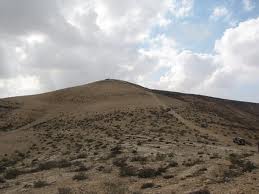
Although I wrote this originally in April, 2013, a recent study of Joshua brought it back again – with the challenge from the Lord to “ask for my mountain” now. I talk a bit about a corresponding challenge from Joshua here. And I’ll talk more about this specific challenge as I start to add new material.
I remember the first time I identified with a Biblical character. Truly identified – as in “Maybe there’s someone like me in the Bible.” Or “Maybe there’s someone in the Bible that my life could look like.” I was 18 years old and it was Caleb.
Moses sent spies into the land God had promised them. On their return, Caleb is the first one to say, “Yeah, the inhabitants are big and scary. But God promised this to us. We can do it because He promised it.” A bit later Joshua voices the same opinion. But they are the minority. They are overruled. They wander the dessert for 40 years with their companions. There’s a promise given – Joshua and Caleb will be the only ones from their generation to enter the promised land.
And so, 40 years later, they do enter the promised land. In the intervening chapters in the Biblical record, we’ve heard almost nothing about Caleb. But we’re hearing a lot about Joshua – the new leader of the Israelites, filling Moses’ shoes, making “as for me and my house” speeches that are recorded for history.
Another five years go by after they enter the land. Caleb comes to Joshua and asks for his inheritance. “Can I have my mountain now? The one God promised me?” And Joshua blesses him and gives him Hebron. Caleb’s waited 45 years for this.
So why did I identify with Caleb 39 years ago (now 49 years ago) when I first encountered him? I was an extremely shy, very fearful, very timid, 18 year old. I knew I was not a Peter or a Paul or a Moses or an Elijah or a Joshua. But Caleb – maybe I could be a Caleb. I resonated with his sense that God was trustworthy (He said we can take the land) but also with his inability to pump up the crowd to agree with him. And with the fact that he was the first to say it, but Joshua “got all the credit”. And the fact that he’s largely “invisible”, people don’t seem to see his potential. And the fact that he served quietly – and probably contentedly – in the background.
But he is also described, the few times that we hear about him in Scripture, as someone who wholeheartedly followed God. He’s commended for that. The God who sees the invisible person saw that Caleb was faithful and his heart was wholeheartedly toward God. That gave me hope. I knew what I couldn’t ever conceive of being. But this gave me a vision for what I could be. One that seemed to fit how I was made.
Caleb was in it for the long haul. In Eugene Peterson’s words, there was a “long obedience in the same direction”. And in the end, there was boldness to ask for the fullness of his promised inheritance.
So I find myself on that journey – long stretches of invisibility, more “behind the scenes” work than “up front” work. But with a hope of being called faithful, wholeheartedly devoted to God. It’s not a works mentality. I’m pretty solidly entrenched in the grace message. It’s not “Maybe if I’m good enough God will say that.” But it does have to do with being content with how God views my heart, with letting go of finding my identity in titles or praise of men. With making sure that in the busyness of life, in the midst of using my gifts for the Kingdom, that I don’t forget to love Him and listen to Him and follow Him – wholeheartedly.
So much goes on in the years of a journey. Caleb’s was largely a journey in the wilderness and I think many of us go through a wilderness on our way from here to there. But even a wilderness journey is not all about drudgery.
You grow. You serve. You deal with pride. You laugh. You cry. You discover what you are gifted in – and what you’ll never be great at. You are stretched in new ways. You see God work in unexpected ways. Other times you can’t figure out what He’s doing. You weep with those who weep and you rejoice with those who rejoice. You see fairy tale beginnings fail to have fairy tale endings. You celebrate births and you deeply mourn untimely deaths. Your heart overflows with joy at times and it breaks with sorrow at other times.
Through it all, I think of Caleb, and realize that being someone who wholeheartedly follows God is a good goal, one that fits how I am made, that doesn’t require me to morph into an extroverted, highly visible and animated leader in order to have value. And it has me wondering whether I’ve asked for the fullness of my inheritance yet. Caleb finished strong. He continued on to do great things after getting his mountain.
So that’s what I want. To wholeheartedly follow God. To desire (and ask for) my full inheritance. To finish strong.
 Betty's Thoughts