Things That Should Not Be Juggled

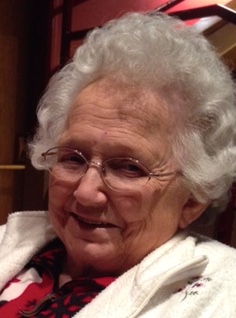
Written in October 2014 during the last months of my mom’s life. She passed away on December 23, 2014.

Life can feel like a juggling act.  Work and rest.  Busy schedules and establishing healthy habits.  Job tasks and everyday home tasks.  Competing projects and resources at work.  The urgent and the important.  Our needs and the needs of others.  Time for friends.  Time to serve and minister.  All too often, we have what can feel like too many balls in the air. 

A week ago, just as the flight attendants made the “cell phones off” announcement, I received a text from my sister in Virginia:  On my way to the hospital to meet Mom’s ambulance.

I was on my way home to Atlanta from Chicago.  My mind had shifted back to work mode – adding new items to my ever increasing “to do” list, beginning to prepare for the week’s meetings.  I love what I do, and work is always busy. 

By the time I landed in Atlanta and drove the hour-plus to home, it was clear that I needed to head for Roanoke.  I didn’t even take my suitcase out of the car – just threw in a couple of extra things and made it partway to Roanoke that night.

It was a serious situation with Mom when I arrived.  The confusion that landed her in the hospital was getting worse, not better.  CT scans, MRIs, EEGs – some information but not enough for a clear-cut initial diagnosis.  Brief moments of being lucid and coherent surrounded by hours and hours and hours of being confused, incoherent or “out of it”. 

I was still in juggling mode when I arrived.  I’ll juggle this and work.  It’s not the worst time for this to happen – no big events right around the corner, no trips to lead this month.  I can go back and forth – carry the full load at work and be attentive here as well. 

My sister – a day ahead of me on this round with Mom and with previous experience being on the front lines with less serious episodes – already knew what I would quickly discover.

Some things should not be juggled.

This is one of them.

Other things need to fall away for the moment. 

Even if it means some balls get completely dropped. 

And even if there is no one else to pick them up.  (And even if your “identity” as the super-responsible one is on the line.)

So we sit and wait and hold her hand and sympathize about the itchiness of her EEG leads.  We ask the “what is your name/what is my name/do you know where you are” assessment questions whenever she wakes up for a few minutes.  We trade off spending the night beside her bed on the uncomfortable recliner.  We try to sort out what the doctors are saying and which ones we trust if there are conflicting opinions. 

I spend a few minutes here and there checking emails.  I make arrangements for the dogs back in Georgia to be taken care of.  I touch base quickly with a few members of my team.  But all of that is in the odd minute here and there.  For now, work and home are not part of a constant juggling act.  They get glanced at, not juggled.

I know that I have it easier than many would:   A capable team and a supportive employer who immediately say “We can make this work.  What do you need?  How can we help?”.  I have a few financial resources that not everyone has.  My daughter is currently in Georgia and able to help on the homefront.  In the end, my choices have not had to be hard ones. 

We’re a week into this.  We’re still unclear what’s ahead.  Or how long I’ll be here.  But it’s an important time. 

It’s a time that is best served by full attention.

A time that should not be juggled.

Holy Moments and Kingdom Minded Grieving

The number of similar examples that have impacted my life since the original post in July 2014 are sobering. I’ll leave this post as it was originally written, with the possibility of telling some other stories in the future.

In July 2014 I had a chance to be part of one of those holy moments you get to experience from time to time.  Those moments when the veil between heaven and earth seems thinner, when you sense you are part of something bigger than “normal” life.  When you see someone act in a way that can only be explained by the presence of the Holy Spirit, infusing them with spiritual eyes and a grace we can’t muster up on our own.  And by seeing it, you are drawn closer as well.

We launched four squads of World Racers – and therefore four squads of World Race parents.  The parent launch event is one of my favorite things in parent ministry.  We give information, they meet our leadership, we hope they get glimpses into our heart for missions and discipleship and their Racers, we answer their questions, we talk about their Racer’s journey but also their journey.  It’s an amazing time.

We had a unique family there this time.  Jon-Roy and Maria Sloan and their son Sterling.  Their daughter, Anastasia, was scheduled to launch.  She was scheduled to meet her squad in person at training camp in May.  And a week or so before training camp, she died in a car accident. 

Her parents wanted to be at launch.  They wanted to be part of the journey of F squad, her squad.  As the dad spoke to the 210 gathered parents, he said they know that Anastasia’s name is not yet finished advancing the kingdom.  They know she (and everyone else) thought she was going on one journey and instead she went on a different journey.  In her blog she had been telling the Lord to take her deep.  She was so sure that God was going to work in and through her.  The Sloans are equally sure that her impact on the kingdom is not yet done. 

As we gathered to pray over the Sloan family, her younger brother Sterling reached for the microphone, looked out at the crowd and said “Your children [your Racers] are going to be fulfilling Matthew 28:19 – they are going to be making disciples of all the nations, baptizing them in the name of the Father, Son and Holy Spirit.”  It was an emotional moment for those of us hearing that.  But it was a holy moment as well.

I can’t imagine the pain you feel if you lose a child.  But I’m grateful for the people who have modeled it for me in ways that profoundly affect me, that remind me there’s an earthly perspective and a deep earthly grieving but there’s also a heavenly perspective, infused with hope.

Dwight and Peggy Buller are people like that.  I’ve gotten to know them since I’ve been at Adventures.  Their daughter Sarah was killed in a car accident while on a mission trip to South Africa in 2009.  Like the Sloans, they knew their daughter’s impact on the kingdom would continue long past her death on this earth – and it has.  There are scholarships and celebrations and so much more in her name.  They received the news on Palm Sunday and every year on Palm Sunday hold a large community celebration – remembering her, but more importantly lifting up her Lord.

Dwight and Peggy are from Minnesota but they love to hang out with Adventures in Missions and they’ve been at several of our parent events.  They’ve shared their story – with tears at times but also with an abiding grasp of God’s goodness to them.  It’s not either/or.  It’s both – a deep, deep grieving and a God of hope and joy.

The Duffs, although I don’t know them as well, are like that too.  Ryan was part of my daughter’s senior class.  It was a small school – only 35 or so in the senior class.  He died in a car accident in November of their senior year.  I watched the Duffs model for that senior class how you walk through grief.  They invited them into the process – spending time with them, holding the visiting hours at the school in a room full of tributes to Ryan created by the senior class,  inviting them to the smaller graveside service after the packed service at the church.  They’ve stayed in touch with many of them – even after 9 years.  They modeled well how to walk through grief.

Linda Duff presents a scholarship in Ryan’s name every year to a graduating senior that in some way reminds them of Ryan or something he cared about.  She does so with grace and joy.

To the Sloans, the Buller, the Duffs and others I have known less well – I will never say “I understand what you are going through” because I don’t.  But I can say this:  You have modeled for me a kingdom perspective.  You’ve reminded me that our life on this earth is not the whole story.  You’ve talked about grace and forgiveness and hope and joy with the deep integrity that comes from a hard path.

And you’ve brought me into holy moments.

Thoughts About Sin Done To Us

Written in April 2014. But it’s still something I cling to – that there is healing for the sin done to us.

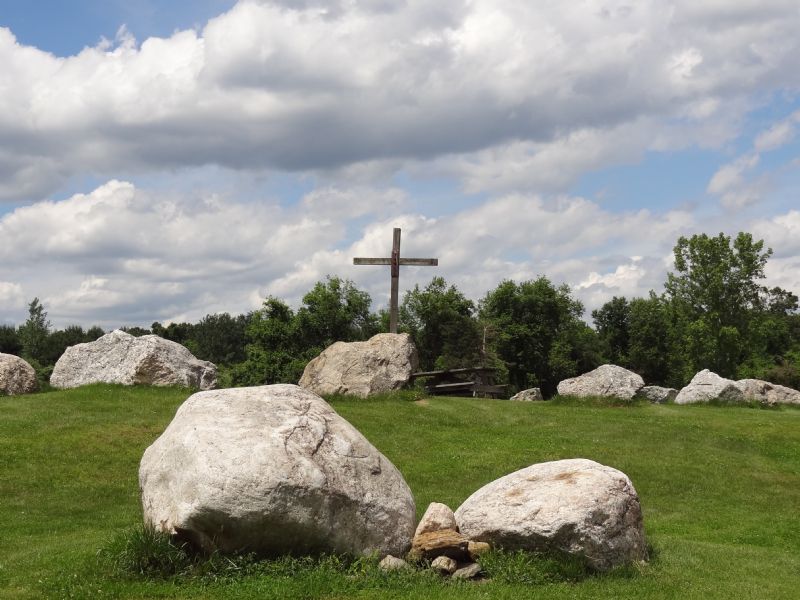
The cross … the symbol of one of the central tenets of the Christian faith.  A particularly visible image during the Easter season.  The reminder that Jesus died – and then rose again.   

The reminder that Jesus did that for us.  For me.  For the forgiveness of my sin.  To make it possible for me to be in an intimate relationship with God.

That’s Basic Christianity 101.

This is not going to be a theological dissertation.  I wouldn’t even know where this fits in various theological constructs.  It’s merely the musings of something that pops into my mind from time to time.

Does the cross just take care of my sin?  Or does it also take care of the sin done to me? 

I’m not talking about the salvation of the person who violates another person and sins against them.  I’m not talking about somehow excusing or minimizing the evil that is present when one person sins in horribly destructive ways against another.

What I’m talking about is this:  Can we run to the cross – can we rely on the power of what was done on the cross – with those sins, the ones done to us, just as we can run to the cross with our own sin?

My experience – and my heart – tells me we can. 

One of my “cling to” verses, discovered in the midst of pain, is 1 John 4:16a – “And so we know and rely on the love God has for us.”  Rely – that’s the word that originally leapt off the page at me.

I understand there are circumstances where the evidence seems stacked against a loving and reliable God.  There are situations where I really don’t know what to say because anything I think to say feels less than what the person needs, it feels insensitive to the depth of pain and abuse.  I don’t pretend that my experience should somehow make it easy for anyone to get past their own pain, their own distrust of God.  But for me, I always come back to the fact that I can know and rely on God’s love for me.  And somehow, the cross becomes the place I know that, the tangible sign of the depth of God’s love.

Maybe this isn’t a new idea to you.  But when I first thought of it this way, that the cross could take care of sin done against us, against me, it was somehow more tangible than a vague pat answer about letting God into the pain or turning the pain over to Him.

I am a huge beneficiary of great counseling and inner healing.  I absolutely want to always be part of a community that has a theology of healing and that encourages the use of gifted counselors and healers.   I have counselors that I credit with giving me back the ability to function after the pain of what happened in my life felt as if it would crush me. 

Ultimately though, my ability to move through pain and into healing seems to rest not just on great insights and technique, or gifted counselors who help me see things I wouldn’t face otherwise.  When I look for the “solid ground” on which to stand, from which to heal, it goes back to being able to know and rely on God’s love – to the cross. 

If the cross is about ripping open the veil between us and God, bringing us into deep and nourishing and life-giving relationship with Him – then it has to take care of anything that stands in the way of that.  So it must take care of our sin.  And it does. 

But for some people, in some circumstances, sin done against them can distort a view of God’s goodness, or God’s desire to be close, or our ability to rely on Him, or even the perception of whether He is real and present and caring.  There are stories where you wonder how anyone can survive such sustained or repeated abuse at such a horrendous level.  The “easy” Christian answers don’t work.  They feel trivial and inappropriate. 

And the story doesn’t have to be big or dramatic for that to be true.  There are lesser known stories as well, the ones that happen day in and day out to people we know and love.  And the damage is the same.  It is not their sin, but it gets in the way of the relationship God offers and desires. 

If the cross removes barriers between us and God, in some way it has to take care of these sins done against us as well.  It has to be big enough and powerful enough for this.

I don’t know how everyone gets there.  I don’t know a magic formula that makes it easy to remove that kind of barrier.  I’m not a gifted counselor.  I know there has to be a willingness to let God into the healing – but I probably won’t know how to get you there.

In spite of that, whether I can explain how it works or not, whether I know how to help you get there or not, I still believe the cross is the answer.  I believe the cross takes care of it. 

Responding to Disappointment

Re-reading this, originally published July 2013, brings back the pain of that event. But the “work” I did to get to this response to disappointment has made a bit difference in my life.

Something happened this week [remember that this was written 10 years ago] that was a crushing disappointment.  But let me be clear right from the start – it was disappointment.  It was not huge injustice.  I was not the victim of abuse or extreme mistreatment.  It was “just” disappointment.  In the big picture of problems in the world, it’s not huge.  For other people it wouldn’t have been more than a minor bump in the road.  For me though, it was crushing.  It caused tears to spill over for more than one day.  I’m well aware that in some ways my disappointment was out of proportion to the circumstances.  I’m normally pretty even-keeled.  This doesn’t happen often.

The specifics matter less in this space than the thoughts about handling disappointment in general. In fact, not playing out the details on this page is part of what feels right in this situation.  This is not about building a case or arguing rightness or wrongness.  So I won’t be sharing details.  What I want to share are the thoughts I have about facing and working through disappointment.

1.  I take responsibility for my own baggage and my own reactions.

There are reasons why it hit me so hard that are not the responsibility of the people who caused the disappointment.  If it triggers past hurts – that’s not their responsibility.  It is mine.  Does it bring back old lies?  I’m the one who needs to battle that.  If it was going to fill a hole in my life and now that won’t happen – it’s not their responsibility to fill the holes in my life.  Does it injure my pride?  That’s my issue, not theirs.  Do I have an inappropriate sense of entitlement?  If so, it’s my responsibility to take care of that.

It is also my responsibility to treat all involved with respect.  And to extend grace to those making hard decisions.  And to not gossip.  Some of the reasons for this decision make sense.  Others are still confusing to me.  But I am responsible for my own actions in response. If I act poorly, I can’t blame it on how disappointed I was or whether it should have happened the way it did.

2.  I allow myself to grieve.

I think it is okay to grieve as long as the grieving moves in the direction of healing and not in the direction of bitterness.  And as long as I don’t get stuck in it.  I won’t get to do something that was already a hope deferred, something I wanted to do months ago and was told I needed to wait.  Because of this opportunity, I had made the hard decision to pass up another one – and the one I hated to say “no” to is now too late to jump into.  So my summer has a huge hole in it.  And there are legitimate things to grieve. 

3.  I decide if this is something appropriate to fight for, or to ask for reconsideration.

There may be times when it is right to ask questions, to advocate for a different outcome, to appropriately ask for reconsideration.  This was one of those times.  It does involve something I’ve poured my heart into, a dream I’ve had for years.  There are legitimate reasons to discuss the situation and there are reasonable questions to ask about the decision.  And I’ve now had those discussions.  In this case, nothing changed.

5.  I decide when and why to stop asking for reconsideration.

Along with deciding there’s a time to push a bit, to advocate a bit, to hope a bit that the decision might be reversed – there’s another question.  When is it time to stop?  And what are the right reasons to stop?  I think sometimes you stop because it’s not the most important battle to be fighting – i.e., you choose your battles.  Other times, I think you stop when you make the decision to just be a good sport about something that didn’t go your way.  And then there are times you stop because you choose to trust that the Lord holds your heart and your dreams and your coming in and your going out. 

6.  I choose not to stay stuck in disappointment and to make choices that move me forward.

How do I do that in practical terms?  I need to talk to people who can help me through it – while being careful to not cross the line to gossip.  But they can only take me so far.  And while it is tempting to continue to rehash it in front of supportive friends, I’ll get stuck if I don’t move beyond that.

There’s internal work that only I can do.  I remember the big picture.  I go back to the things that give me perspective.  I run toward those things and not away from them.  It’s part of choosing to move through disappointment rather than stewing in it.  So I make sure I spend extra time with the Lord rather than finding excuses to avoid it.  I know that time with Him brings peace.  So my choices point to whether I desire peace or self-pity.

And then, in this case, I temporarily removed myself from the situation.  As I struggled a bit to find my way through, I took a break.  I got out of town for a day.  I went somewhere I’d never been before.  I created a situation that took my mind off the disappointment.

Three days after getting the news, am I still sad?  Yes.  But not so much.  Does it still sting?  A bit.  But I’ve begun to reframe the rest of my summer to include something I wouldn’t have had time to do before. 

And I’m grateful for friends to talk to, a job I really do love and a Lord I can trust with my heart, who calls me out of disappointment and into peace.

Words to Cling To

Originally published in May 2013. I still love words. The examples of words I cling to have grown in the last ten years – some might pop up on a future post.

I’ve always loved words.  And crossword puzzles.  And word games.  I like to edit and wordsmith documents – to find just the right combination of words.  Putting words on paper, in the form of letter writing or journaling, is therapeutic for me.  It brings peace.  It helps me hear the Lord’s voice.

Words from friends and counselors and mentors bring life.  And challenge.  And hope.  “Words of affirmation” is one of my love languages – but they must be sincere, not manipulative or grudging.  Like the description of Mary after Jesus’ birth, I treasure them in my heart. 

Words matter. 

I have a few words I cling to.  Many of them came to me in painful times and now return to provide comfort when a remnant of the original pain resurfaces. 

Other words are about hopes and dreams – things spoken over me that I desperately want to be true and I hang on to them in hopeful expectation of what the Lord will unfold in my life.

“The sorrows for the appointed feasts I will remove from you.”  (Zephaniah 3:18, NIV)

This is a promise I’ve clung to over the last couple of days.  You see, Friday should have been my 33rd wedding anniversary.  [Note – this was written 10 years ago so the timing is off.]. But it wasn’t.  I’m at a point where, most years, the date has begun to come and go pretty easily.  Some years, however, the tears come to the surface quickly and unexpectedly.  Not for days.  Sometimes not even for hours.  But in the midst of a rich and full life, they are an almost surprising reminder of the pain.  This was one of those years.  So I clung to the promise the Lord had given me – that He will remove the sorrows for the appointed feasts.  I know the original context was a bit different, but I also know when I first read this years ago, my heart leapt.  It was a promise to me in my pain.  A promise to remove the sorrow of anniversaries that should have been … but aren’t.

There were other words that made a difference.  The new friends who discovered my day was tough and who made easy conversation as we worked together on something.  And the words I put into an email to a friend, asking for prayer, and the response that brought tears of gratitude for how richly God blesses me through the people in my life.  There were the quick text messages of encouragement from those who understand.  And the opportunity to be with old friends, and with family, and to talk about memories of life lived together when our kids were all young. 

And, just as I knew it would, the pain passed.  The words brought comfort – and new things to treasure in my heart. 

Those Annoying, Pesky, Identity Gnats

Original date – February 2013.

I started this post a dozen times and couldn’t figure out how to structure it.  I couldn’t make it say what I want it to say.

I tried approaching it from “I hate it when I think I’ve learned a lesson/been healed/etc. and then it resurfaces and I have to deal with it again.”  But that approach felt too heavy handed.  Like I was giving this particular thing too much credit.  Yes – there are those things I thought I had “mastered”, where I thought all the nooks and crannies had been healed and made whole, where it seemed the foundations were firm and unshakeable.   And then I realize they are back.  But only sort of, kind of, not as strong, not as distracting, not as painful.  I still know where they come from.  I recognize the triggers and I know why they impact me the way they do.  But it doesn’t feel as if I’m fighting giants any more.

Or maybe something starts the “old tapes” playing again and I’m back in that place of feeling hurt, fearful, unworthy, afraid of so many things, afraid that once again I will not be “good enough”.  Those are my old tapes.  Your old tapes may tell you something else.  But then I realize there’s something different this time.  The other voice – the one that says I am beautiful, worthy and capable – chimes in without my having to work hard at getting it there.  And perspective begins to return pretty quickly.

Years ago a friend of mine described a season of spiritual warfare as being like a swarm of gnats.  Not a serious threat.  Just annoying little pests that keep you swatting.  If a few of them bite, it’s a nuisance.  But you don’t end up out of commission.

That’s the closest I can come to describing those times where my identity issues have been triggered once again, with a greater frequency than they have been in a while.  When I originally wrote this, I’d been in a season like this for about six weeks. It had been a pretty steady stream of feeling like I was swatting gnats.

I know where I’m vulnerable.  I know where my tender places are.  But I have also learned how to swat the gnats that attack my identity.

I learned that someone from my past was saying untrue things about me and it hurt.  I got scared that I would lose valued friendships over it.  But I contacted the people whose friendships feel most at risk and that matter most to me – and they respond in beautiful ways that cause tears of gratitude to overflow. 

Early in my years at Adventures in Missions, I found myself in a steep learning curve with new job responsibilities and I worried that I wouldn’t be good enough.  And I realized how much my identity was tied to doing my job well.  That’s a good thing to strive for but it is not the sum total of my identity.  A sermon reminds me of that and a blog by a friend points out that stretching your capacity is like exercising a muscle – it’s a good thing and increases your ability.  Suddenly I’m more excited and less scared.  And I like that I’m willing to try things these days without having a guarantee of success.  It’s a sign of growth.

I’m encouraged to try to do something (a simple thing that most people probably do without thinking) – and the affirmation from those teaching me that they are sure I can do it brings to mind a list of times I was told that I couldn’t do things “right”.  I grieve a bit over “the list” and the feelings it brings back, and then I realize I am enjoying a new sense of freedom to try things, unafraid that I’ll be criticized for the effort.  My worth is not determined by whether I succeed at everything or even whether I do things the way someone else does.

I regularly feel like I don’t fit.  I’m an introvert in an organization of extroverts.  I’m a detail person in an organization of visionaries.  I love that I work with people like that – because I love being at a table where people bring things to the mix that I can’t bring.  But I wonder if they feel the same about me.  The desire to be different than I am – in order to fit in better – resurfaces.  And then the Lord asks me to make a list of all the things I can remember Him saying about who I am – and it helps me trust the way He made me.

I want my identity and my sense of worth to be firmly established in the Lord.  And that is far more true than it used to be.  In the meantime, when there is a season of swatting at gnats, then I can do that, knowing that while it may be an occasional nuisance it is no longer a battle against giants.  And for that I am grateful.

Darkness … and Light

To be honest, I’ve been dreading this moment. When I get to this original post (posted December 16, 2012) and it’s the next in line to transfer to my new platform. It’s probably the post that I’ve done the most rethinking on in the ten years since posting – and I know I need to do an update blog when I start posting new material. I considered just skipping it. But I don’t shy away from hard conversations. I try to embrace them. And there’s enough here to post – it’s an accurate reflection of one stage of my struggle with this. It’s not the end of wrestling with how to respond. The need to figure out that response has grown stronger in the intervening years. But the belief that God is still God, even when we can’t make sense of circumstances, does remain. It’s not a full answer though – and the issue is important enough that I need to keep wrestling.

Twenty seven dead.  Twenty of them children.  There are no words.  And publishing thoughts still in process is a risky thing, but it seems important to try.

Children.  Not a teen angry at classmates – although that is equally tragic.  Not an employee angry at perceived wrongs by a boss or company – also tragic.  But children – most of them 6 or 7 years old.  There are no words.

How do you attend 27 funerals?  What about the one grade level that will always be smaller and gradually work its way up the ladder over the next 12 years?  How do parents and teachers guide young children through this, deal with questions and sleepless nights and fears that no child should have to experience? 

When will this end, this seeming escalation of violence?

During Advent and Christmas I’m always spiritually watchful for some new insight into, or connection with, the story that is so familiar.  Jesus born in a manger.  Shepherds.  Wisemen.  We’ve heard it so many times.  The incarnation is an incredibly wonderful miracle and I never lose my wonder at that event.  But the story, the biblical narrative, seems so familiar.

In an unexpected way, the events on Friday jolted me into a part of the story I’ve never spent much time in before.  “When Herod realized that he had been outwitted by the Magi, he was furious, and he gave orders to kill all the boys in Bethlehem and its vicinity who were two years old and under, in accordance with the time he had learned from the Magi.”  (Matthew 2:16)

We don’t talk much about this.  I don’t know how many died.  But I do know there were tears and grieving, that there were mothers and fathers who would understand the anguish of the Newtown parents.  That there was a town in shock.

Madeleine L’Engle, in An Irrational Season, wonders whether Jesus’ tenderness toward children was partially a response to knowing that Herod’s actions in the massacre were connected to the news of Jesus’ birth.  That in one sense, He was responsible for their deaths.

Who can fathom losing all the boys in a town under 2 years old?  Or losing 20 young children in a school in Connecticut? 

Into this world – the one 2000 years ago and the one today – comes Jesus, the hope of the world, the light that overcomes darkness, the one who cares for the brokenhearted.

We know the end of the story.  Light wins.  Darkness loses.  But in the meantime – in this in between time – there are so many occasions for tears, for grieving.  So many tragedies.  So much that is “not okay”.  School shootings.  Abused and exploited women and children.  Poverty.  So many issues and policies that need wisdom in the midst of thoughtful and intelligent discussions.  What do we do about guns, mental illness, school security?  These are important discussions. 

But right now it’s also okay to grieve.  To admit that we can’t understand “why”.  There are tears that are appropriate to shed.  It’s okay to wonder “How do you cling to a glimmer of hope and light in the face of such darkness?”

For me, it’s also become important to say “God is still God”.  I don’t want to get caught up in wondering why God allows – or doesn’t prevent – evil.  Or to discuss free will and the fall. But I also don’t want to deny that those are important conversations.

I just need to affirm that God is still God.  The baby born 2000 years ago is still the hope of the world, the light shining in the darkness, the one who can be clung to and who binds up wounds and cares for the brokenhearted.

God is still God.  God is still God.  God is still God.

The Church of the Floating Jesus

I didn’t attend this funeral yesterday. It was in November 2012. But my gratitude for this church has not diminished as the years have continued to pass.

Yesterday I attended a funeral – one of those sudden and unexpected deaths that don’t make sense this side of heaven.  A vibrant, full of life, wife and mother collapses without warning and is gone.  Three college/early career age children speak tenderly, and humorously, at the service.  I remember them as toddlers in my Sunday School class and my heart breaks for them.  A husband, so enjoying this stage of their marriage, is denied the joy of growing old with the woman he found so amazing.   Her name is Holly – and the years that eroded the amount of contact we had after I moved away from Atlanta 20 years ago [now 30 years ago] did not diminish that she had a bigger impact on me than she probably ever knew.  If you have a couple of minutes, read her “resume”.  It’s how she introduced herself to potential schools and I promise you it’s unlike anything you’ve ever read in a resume.

The funeral was at the church I attended when I lived in Georgia back then – before the move to Connecticut. Before the move back to Georgia.  It was the place where I’d known Holly and had taught her children in Sunday School.  But it is also the place where God powerfully shaped me.  And those memories flooded me as I sat there.

Father Gray challenged me spiritually and intellectually in a way that opened new worlds to me.  He affirmed ministry gifts in me and encouraged me to step into them, even when I was tentative about doing so.  Even after we moved to Connecticut, he remained a mentor and counselor.  He’s the one who taught me how to navigate some painful relationships – who encouraged me to be truthful instead of always defaulting to “nice”.  He taught me to look poor people in the eye because it treated them with an appropriate dignity.

And there was Nancy, who as Christian Education Director, spoke life and courage into me when I was timid, shy and fearful even in my 30s.  She was a mentor in ways that went so far beyond Christian Education.  She drew out gifts in me – not by pushing me from behind into the unknown, but by standing in front, reaching back, grabbing my hand and playfully leading me forward.  Since retiring from the church, she has become an accomplished artist and one of my most treasured possessions is a portrait she did of my kids for my 40th birthday.

So many more people and so many more things – it’s where I learned about community and about corporate (not just individual) worship and sin and prayer.  It was my first experience in a liturgical church and I discovered an unexpected richness in that.  It fed something in me that I hadn’t even realized was hungry and it connected me more deeply than I’d ever been to the saints who have gone before me. 

It’s the place where I began to come into a sense of who I was, that laid the foundation for all my future ministry, that gave me the tools that years later helped me walk through healing when my life fell apart. 

It opened my eyes to a God who cares about people I’d given little thought to. 

It is where I began to believe that God likes me – which somehow felt more personal and more amazing than the generic “love” I’d grown up hearing about.

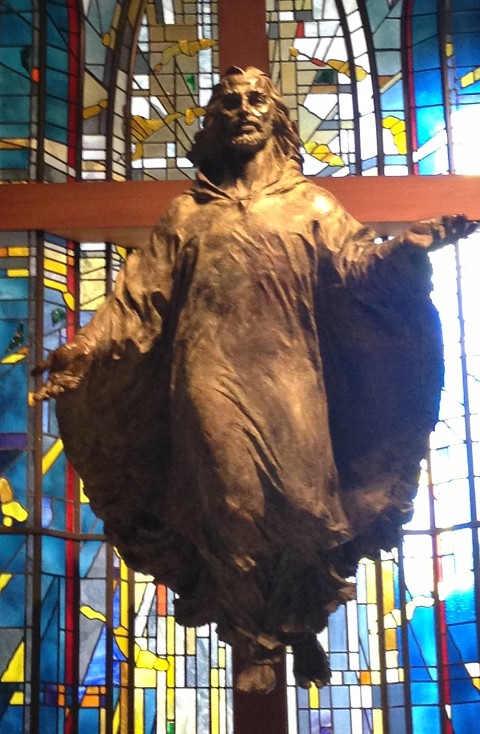
So why the “floating Jesus”?  It’s not the actual name of the church.  But it’s what one of my preschool Sunday School students called the magnificent sculpture that grabs your attention when you walk into the sanctuary.  In an odd way, that I can’t quite explain, the powerfulness of that sculpture washed over me in long forgotten ways yesterday.  This is no wimpy Jesus.  This is a Jesus I want to know and follow.  One that I can be honest with and still know that I can rely on Him.  [He’s also a fun loving Jesus.  Every year on Pentecost we’d walk into the sanctuary and see Him holding a bunch of balloons.]

And Father Gray, in the homily, reminded us that this is the Jesus we release Holly to.  The program for the service says this:  “Christians believe in eternal life through Jesus Christ.  We believed that even before Holly was taken from us.  Today we draw upon that faith and upon its source for strength. … This service is not intended primarily to convey emotional comfort to the bereaved.  This community is presently seeking to do that in other ways over a longer period of time.  This service is shaped to permit us together to do something equally difficult and necessary:  to give God our permission to hold and care for Holly on our behalf. … We are doing this together, not as isolated individuals.”

There was something holy about being part of that.

And there’s something humbling, in a sacred way, about remembering the wide variety of gifts given to me by that particular place and that particular community.  I am who I am because of my time there.

Kingdom Journeys

This was written over 10 years ago, but the concept of journey – which was newer to me at that point – still feels like an important discipline in my life. To be honest, revisiting this post makes me wonder if there’s something new waiting to be embraced by me.

Those who know me or who follow this blog know that I’ve been on a journey.  Specifically, starting in the early 2000s, the spiritual journey included walking through the painful end of my marriage and discovering, in the midst of that, new sources for my identity and new depths to my relationship with Jesus.  It has also included the restlessness that would not go away until I allowed the Lord to speak fully into that stage of my life.  For me, there was been a physical journey as well.  At first it looked like mission trips that took me out of my comfort zone and stirred my concern for the world.  It eventually meant a move from Connecticut to Georgia. 

So journey is not a new theme for me.  To be honest though, when this season started in the early 2000s I probably wasn’t actively seeking a journey.  I wanted to continue to grow spiritually – just as I had for the 30 years I’d already been a believer – but I’m not sure I understood journey.  Or maybe I just assumed that spiritual growth and journey were the same thing – that vague “spiritual journey” everyone is on. 

But the last 20 years of my life have definitely been a journey.  I’m not sure that in the beginning I intentionally chose to embark on a journey – with its stages of abandonment, brokenness and dependence.  It feels like circumstances thrust me in the midst of a journey that I wouldn’t have chosen on my own.  But while I may not have willingly chosen to start it, I did choose to embrace it as a journey – to trust that there was a good purpose in it and that, if I allowed it to, it could shape me in life-altering ways. 

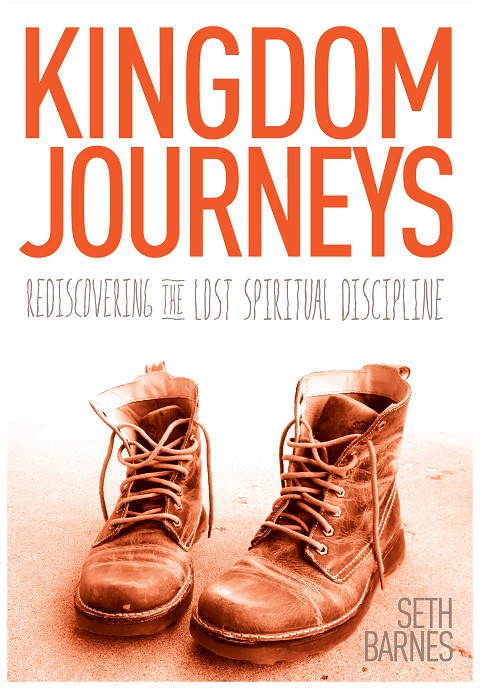
I have a new appreciation for the importance of journey, the subtle ways it is different from other spiritual growth and it’s ability to “accelerate discipleship” or “turbo-charge a person’s faith walk” in the words of Seth Barnes.  Seth, founder and executive director of Adventures in Missions, goes so far as to call it “the lost spiritual discipline”.  In his book, Kingdom Journeys: Rediscovering the Lost Spiritual Discipline, he says “A journey is an act of leaving – a process of physical abandon that teaches us how to do the same spiritually.  Perhaps, to find your true identity you need to abandon everything else.” (p. 22)   

Finding your true identity and stripping away the things that provide false security –  it’s worth doing.  It’s important work for anyone who wants to advance God’s kingdom in the world.  Journey helps you do this.

We see the theme in how Jesus related to His disciples – asking them to abandon everything and follow Him, and then sending them out on journeys without their own provisions.  We see it historically in the idea of pilgrimage. 

What makes something a kingdom journey?  From Seth’s book:  “What sets a kingdom journey apart from gap years, road trips, and volunteer jaunts is the central focus on Jesus’ kingdom.  A kingdom journey is first and foremost about expanding God’s reign in the world and increasing it inside our hearts.”  (p. 55)

I encourage you to let the Lord speak to you about it.  See what stirs in you.  See if your view of the world expands.  See if it confirms you are where you are called to be – or if it feeds a restlessness you may already feel. 

Consider what it looks like if journey is really a life-transforming spiritual discipline.

Gratitude and Transformation

From May 20 2012

Erwin McManus, in a couple of the talks I’ve heard him give, has posed this question:  Why are some people transformed as they go through things and other people are not transformed?  Why do some move on, and some stay stuck? 

His conclusion is that gratitude makes a big difference. 

I’m well aware that I’ll always have days here and there when my emotions go up and down.  And there will be days that are harder than others.  But I’m also so aware of what I have to be grateful for.  For instance …

I get to …

  • … spend time with family.  I don’t take lightly that this is a precious thing.  The last few weeks have brought many opportunities – an Easter trip to Chicago to see the kids, a trip to Roanoke to see my mom and sister, a visit from my daughter who lives in Chicago, a trip to the aquarium with my nieces, shared meals with in-laws. 
  • … be part of an organization that disciples teens and 20-somethings in exciting ways.  I love being a part of what God is doing in this generation.  This week I’ll spend a day at World Race Training Camp.  In July we’re launching 3 World Race squads (approximately 150 people) who will spend 11 months bringing the Kingdom to far away places.  I get to watch it happen and meet the people and hear the stories.
  • … open my house to a wide variety of people.  People who are home from mission fields like Peru, or looking to move to Georgia, or preparing to launch long term to Cambodia, Swaziland or Ireland.  People who need a place to stay for a while or people who come just for dinner.  It’s all good.
  • … enjoy a home in a beautiful setting, with plenty to eat and enough resources to do a little bit of pampering of both myself and others. 

I love …

  • … parenting adult children
  • … ministering to parents
  • … making a house a home
  • … cooking/baking
  • … reading
  • … going to movies with friends
  • … talking about both big and little things
  • … seeing water (Lake Lanier and rivers) and mountains as I drive to work (or now, 10 years later, living within walking distance of the beach

I will never forget that …

  • … hard times, and the work put into surviving and getting through them, can bring gifts that last far beyond the end of that particular heartbreak – and which have far wider applicability in your life.  They shape your character, your outlook and your compassion.
  •  … in the hardest of times, I was grateful for His Presence.  God was bringing the recognition that I was stronger than I thought I was and that I had more value than I thought I did.  And seeing myself that way was life-changing.
  • … when who I was as a person and as a woman was most under attack, counselors walked me through the process of accepting that I was deeply loved by my Heavenly Father and by my friends.
  • … when I’ve been underutilized and frustrated in jobs, I’ve learned what it means to find all of my identity in Him – and I’ve learned when to accept a season of “invisibility” and when to step out in faith toward something different. 
  • … when I left friends and community behind in Connecticut, I came to a new place that is bringing life to me in Georgia – and now 10 years later a new community in Georgia and the opportunity to continue to work remotely.

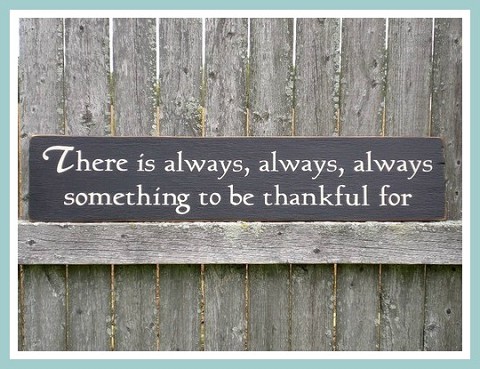
So I’m grateful.  And I hope Erwin is right.  I hope it continues to transform me, to bring me deeper into the heart of God, to make my character and my actions more like His.  I hope it gives me eyes and ears and hands that hear and serve and enjoy and bless others.  That it causes worship to rise plentifully from my lips and my mind and my heart. 

Thanks be to God … who gives good gifts … and who brings deep and real transformation.