
Five Years

Originally written in July 2016 on my 5 year anniversary with Adventures in Missions. Revisiting this is a good reminder of my call to go there – and the importance of “call” in general. It’s also a reminder that the journey was still just beginning at that point.

July 15, 2016 was my 5 year anniversary at Adventures in Missions. I’ve been trying to decide if I have anything profound or important to say.

It’s a milestone. I’ve held volunteer positions longer than 5 years, but paid positions are a different matter – in part because of the 20 years I spent as a stay at home mom. The next longest one was just under 5 years. So I’m entering new territory. But there’s nothing particularly profound about that. 

Has it been worth it? Leaving Connecticut, an amazing church, incredible friends? Taking an out of character leap of faith to move to Georgia and work for Adventures in Missions? That’s worth pondering.

It’s the wrong question in one sense, however. I felt a strong sense of call. And a restlessness that intensified rather than abated. In the end, I was acting in obedience to that. “Worth it” is secondary to “call”. I wrestled with it, I wisely waited until certain things were clear, I did not rush into this. And all of those things worked together in very good ways. Ultimately, my “yes” was to the Lord and not to my own desires. A sense of call is the solid foundation I return to time and time again.

But am I glad I did it? Absolutely – a definite YES. It’s been both unexpectedly good and very hard. But both of those things have produced growth and I’m grateful.

I have missed the community in Connecticut deeply – and that has not lessened as time has gone on. In some ways, the longing for it has grown more intense. But I have also learned that I am stronger and braver than I thought I was. 

I have had the opportunity to build a new program (for parents), lead trips and see the world. In many ways, it is more than I ever imagined it could be. But I have also felt misunderstood and the sense that I don’t quite fit in never goes away. I am an introvert in an extraverted environment. I am quiet and I observe well, but the norm here is to dive headlong into things with greater speed. I get from A to B by seeing the obstacles and knowing how to navigate or solve them; but what feels like forward movement to me feels like I’m raining on their parade to others. It’s not about better or worse. It’s about different styles and different giftings. But there have been seasons of weariness in addition to seasons of great delight.

And in all these things I’ve never lost sight of the big picture. I’m called here – to be part of bringing Kingdom by bringing my skills to Adventures in Missions. I’ve grown through the challenges. My view of the world is bigger. I’ve loved the experiences. I love what I’ve learned about God and what I’ve learned about myself.

It’s also been part of God redeeming a season of my life far beyond anything I could have hoped for. With great confidence I can say that this leap of faith, this moving to Georgia, has been good.

Finally, for those of you who have supported me, prayed for me and encouraged me – THANK YOU. My needs go far beyond the financial support I need to raise. Without your love and your prayers and your words of encouragement, I wouldn’t have been able to continue to say “yes”. I treasure the many, many ways you have blessed me.

I believe the “yes” continues – and I can’t wait to see what’s ahead.

Has Safety Become An Idol?

Some level of risk is inherent in life in general. And missions brings some additional ones as well. I believe that what I wrote in October 2015 is still true – about risk and about idolatry in general.

I’ll admit – I’m a bit scared to write this. There’s some (theologically unsound) apprehension that once I say this out loud, or in writing, the Lord will ask me to live it out more completely.

I place a high priority on safety. I’m not a fan of “risk for risk’s sake”. I want to feel safe – and my choices of where to live and what to do on a daily basis are impacted by this.  I admit to feeling a bit nervous when my adult daughter lives in a city and I don’t know how “safe” her neighborhood is. My first thought when I think of certain regions of the world or certain parts of a city is primarily the lack of safety. And so on – in big and small ways, my thoughts are filtered through safety.

I don’t think that is necessarily wrong.  In fact, I think it’s wise.

But what if safety becomes an idol?

How do we know if it is an idol? For me, it would be an idol if my “yes” to the Lord was held hostage to my requirement for safety. If safety absolutely had to be first – no matter what, no exceptions.

As followers of Jesus, idolatry in any form needs to be recognized and confronted with brutal honesty about the place it holds in our lives.  Anything that supplants the Lord as number one in our lives is an idol. Is safety an idol in my life? Maybe not.  Do I need to be watchful so that it doesn’t become one?  I do.  If I felt the Lord calling me to an unsafe place, would I go?  I hope so. 

There’s a commonly repeated phrase, intended to bring comfort, but which nags at me because I don’t think it is true – at least not the way people tend to use it. 

“The safest place to be is the center of God’s will.” 

Is the center of God’s will absolutely the RIGHT or BEST place to be?  Yes.  Is it the “safest” by the measure most of us use for safety?  I’m not sure it is.

Look at the apostle Paul, who describes his life this way:  “Five times I received at the hands of the Jews the forty lashes less one. Three times I was beaten with rods. Once I was stoned. Three times I was shipwrecked; a night and a day I was adrift at sea; on frequent journeys, in danger from rivers, danger from robbers, danger from my own people, danger from Gentiles, danger in the city, danger in the wilderness, danger at sea, danger from false brothers; in toil and hardship, through many a sleepless night, in hunger and thirst, often without food, in cold and exposure.” (2 Cor. 11:24-27) 

There’s the early church, in Acts 3:29, who when faced with strong persecution did not pray for safety but prayed “Lord, look upon their threats and grant to your servants to continue to speak your word with all boldness ….”

Matt Blazer, my pastor in Connecticut, describes any promised safety this way:  It refers to our internal heart and our eternal salvation.

So what does it take to make this shift in perspective?

Let’s start by being honest that safety and comfort are not the same thing.  Most of the world lives very differently than we do. A lack of nice houses, air conditioning, good food, regular electricity, or indoor toilets – or even the presence of things like lice and bed bugs – is not primarily a safety issue.  It’s primarily a comfort issue.  We can talk about safety, but let’s make sure we’re not really talking about comfort. 

Let’s admit that it is impossible to be incarnational with our message of the gospel and also make our comfort or our safety the most important thing. If we follow the model of Jesus, we will dwell among those we are called to love. Whether or not it is comfortable.  Whether or not it is safe.

Let’s realize that the shift involves the spiritual realm and not just the physical one. Erwin McManus tells a story of his son, who had been scared by demon stories during his first time at a Christian summer camp. He asks Erwin “Will you pray that God will keep me safe?” Erwin’s response was “I can’t pray that God will always keep you safe, but I will pray that God makes you so dangerous that when you enter a room, the demons flee.” (paraphrased based on my memory of the story)

Can I get there?  To the point where I am more concerned about being powerful in the spiritual realm than safe or comfortable in the physical realm?  I don’t know.  But I think I’m supposed to try.

(Postscript Note:  I work for an organization that makes safety a top priority for our mission trip participants – and it is right for us to do so. This is not about questioning or changing that. Scripture is clear that we are to be wise, that we are to count the cost before entering into something. I believe safety is part of that equation.  But I’ve written before about a tendency to mask fear by calling it “wisdom”. And Seth Barnes, the founder of Adventures in Missions, often tells people that if we wanted our kids to be safe, we shouldn’t have introduced them to Jesus.)

The “Hard to Name” Blog Post

I wish I could say this has gotten easier since it was written in May of 2014. At that point, I’d been doing it for 3 years. It’s now been 12 years. My gratitude for the support team that makes it possible for me to say “yes” to this call – whether that is financial support, prayer or other forms of encouragement – is huge. It’s still not the easiest part of my journey, but God has been faithful.

I’ve changed the title of this post quite a few times – trying to find one that captures what I want it to.  I’ve tried “It’s Humbling”, or more specifically, “The Humbling Experience of Support Raising”, or “What Have I Learned About Obedience and Joy and Gratitude by Support Raising” or “What It Has Felt Like to Support Raise”.  But none of those quite capture my jumbled thoughts.  Or maybe this is just a hard one to write.

I know.  For some of you, you want to stop reading right here.  Please don’t. This isn’t about an “ask”.   It is an attempt to share with you a bit of my journey in the same way I have shared on other topics.  I want to be transparent about how I think and process and wrestle.  I want to share the things that have been hard.  The things that have been nice surprises.  Where it has stretched me.  Where it has exhausted me.  Where there have been great stories. What I’ve discovered.  What I still wrestle with.

Essentially everyone I know is bombarded with various requests.  Or you don’t believe in people raising support.  Or you are ambivalent (or not!) about short term missions. I know that and I am respectful of that.  There are organizations that require their home office staff to fundraise (like Adventures) and some who don’t.  There are ways to do short term missions and discipleship with integrity and there are methods that are offensive to everyone involved. 

But this isn’t about those details.  It’s about my journey with being called to an organization I believe in, that tells me this is “part of the job”. 

And part of what I’ve discovered is that it is more than just a “job requirement”.  There are unexpected privileges in it – along with the other stuff.

I’ll be honest – the thought of having to “raise support” was one of the hurdles I had to get over before I moved to Georgia to work with Adventures in Missions.  I was in my mid-fifties.  It was this simple:  I didn’t want to do it. 

In the end though, it became a matter of obedience.  The restlessness that I knew was from the Lord was pointing increasingly toward leaving Connecticut and had begun to point directly toward Adventures in Missions.  And I reached the point where I knew for sure that to refuse to make that move because of the fund raising component would be active disobedience to what I was being asked by the Lord to do.  The right question was not “Do I have to fund raise?” but “Is God calling me to Adventures in Missions?”

So I’ve learned to trust God in new ways about the hard and scary (and initially distasteful) parts of obedience.

At times I have to actively check my tendency to compare myself (consciously or unconsciously) to those who don’t raise support.  There are two primary ways I can get off track here.  First, raising support for my full-time, long-term job is different than raising for a specific trip or a specific project.  It’s not what I thought I would be doing at this stage of my life.  And I’ve realized that it’s the place where a sense of entitlement can subtly creep in.  “I shouldn’t have to do this.”  “I am owed a salary.”  But I know a sense of entitlement robs you of joy.

So I’ve learned to not give the enemy a foothold by entertaining thoughts that in reality have to do with a sense of entitlement.

A second result of comparing myself to others is that almost without realizing it, those thoughts can feed lies I have no business believing.  Lies about my worth or value.  That my worth is diminished because I don’t get “paid” in a traditional way.  Lies that say I can’t do anything else.  That my security rests in my ability to raise support.   Left unchecked, the lies can bring up the pain and baggage of the divorce.  I do acutely feel the “weight” of not having a spouse to share the burden with but ultimately that can feed into a lie that I’m truly alone. 

However, I know that these lies would surface (in one form or another) no matter where I was, what I was doing and whether or not I was raising support.  The enemy knows where I am vulnerable and he pokes at those spots.  It has nothing to do with support raising.

Therefore, I need to be vigilant in holding onto truth and rejecting lies the enemy would want to have take root in my life.

For much of my married life I was on the other side – the donor who could write the large check.  I often say it’s more fun to be on that side.  But while writing this, I realized I’m not as sure as I used to be about that blanket statement.  I now think it was more fun to be on that side when that was where I was supposed to be.  Supporting a wide range of people and causes kept me connected to what God was doing in the world.  I was a part of helping make something happen even though I couldn’t be on what most people would call the “front lines”. 

It was a gift and a privilege to be able to do that.

But now I’m on the other side – and to be honest, I’m so sure I’m supposed to be here that there’s not a strong draw to be anywhere else, even back on the other side of the checkbook.  There is great delight in being closer to the field ministry, in seeing at closer range what is happening around the world.  In using my skills and talents in a very different environment. In being utilized and fulfilled in a calling.

That I would be called to this is it’s own gift and privilege. 

When I look at the big picture, when I’m not focusing specifically on having to “ask for support”, I’m no longer sure that being on the check writing side is more fun.  It feels more secure, I suppose, but fun … maybe not. 

As I wrap this up, I don’t want to rely on clichéd phrases.  Some of what I’m about to say are things I’ve always heard from support raised missionaries.  And I’ve discovered they are really true.  Not clichés, not “formulas” or “the right thing to say”, but deep down true.  So here goes. 

Some of the good things about support raising: 

  • It has connected me with people in wonderful ways.  It’s true – the people who are nudged by the Holy Spirit to support you may surprise you.  And the gratitude I feel is overwhelming.  As I look at the amount that has been given to Adventures in Missions for my support, I am humbled, and grateful.  It amazes me.
  • It gives me the chance to tell my story and Adventures’ story – and the story of my faith and what God is doing in the world – in a different way.  I’m loving that.
  • I get to experience God’s leading, and God’s faithfulness, in new ways.  I have to rely on Him in different ways.  And I am stripped of any illusion that I can take care of myself.  It may be scary – but there’s freedom in that as well.
  • I’ve had the true joy of people who have stepped out in faith to give $10 a month – where I know that was hard for them.  When that happens, and when I get to be part of it – it’s such a joyful privilege.  What that says to me about their desire to be part of what God is doing here – and what that says about their trust in my call – feels like a holy thing.  And it brings great joy to see them take their own steps of faith.
  • I’ve had people say “You need to be doing what you’re good at in ministry instead of spending time support raising” and they did something which covered most of my shortages for a year.  Words can’t express what that felt like.
  • I’ve been blessed by the people who can’t give financially but who pray faithfully for me and for my ministry.  That gift really is of great value to me and I am connected to them in ways that are very similar to my connection to financial donors.  I couldn’t do this without them and I love being dependent on them as well as on my financial donors. 

There are hard parts too.  I still don’t love to “ask”.  I still worry about putting people on the spot (and while I believe it is also giving them a chance to participate in something that matters – it’s still hard for me to do).  I’ve fallen far short of where I want to be in terms of personal contact and thank yous and newsletters and updates.  Finding time to do the important things (like those) in the midst of urgent things (like the daily ministry needs) has been harder than I expected.  And I worry that people don’t know how grateful I really am.

So it’s still a struggle in some ways.  There’s still a part of me that wishes I didn’t have to do it.  But I’m learning valuable things that come as part of doing it and for that, I’m grateful.

A Sermon to Myself About Busyness and Spiritual Dryness

Originally published March 2014. The pace of the job has slowed down considerably in recent years, and I’ve recognized areas where it was right and healthy to build some new margins into my life, but I feel the need to stay vigilant.

I love what I do.  This job fits me better than any other I’ve ever had.  And I’m good at what I do.  Good in the deep down “right fit” kind of way.  I’m in a season of life where there are few non-job demands on my time.  There’s no one at home waiting for me.  No one gets “hurt” if my work week creeps up to 70 or 80 hours a week or if I do emails at 3:30 a.m.  Aside from some attention to physical well-being it seems okay to work at this pace. 

Especially because I love what I do.  Especially because staying busy eases the loneliness.

I spent Saturday on a silent Lenten retreat.  For most of the day there was no talking, no TV/music in the background, no electronics, no phone or email or Facebook.  Just me, my Bible, my journal and the Lord.  It’s a practice that used to be part of the regular rhythm of my life and I realized some of what I’ve lost as it has disappeared from my routine.  As I’ve decided I’m too busy to take that time.

In the quiet and the rest, I realized that my overly busy schedule has brought me to a point of spiritual dryness.  I no longer slip quickly and easily into my heavenly Father’s lap.  I no longer feel the freshness of the Lord bringing scripture alive on a daily basis.  My prayer life is more mechanical.  There have been far too many “catch you later when I have more time” conversations with the Lord.

It’s not that I haven’t been growing.  I have.  And it’s not that I feel like I’m in a spiritual desert.  I’m not.  But there’s a dullness where there should be a brilliance.

I recently spent a few days in Rome and had a chance to see the Sistine Chapel on a “before hours” tour.  No crowds, a few small tours totaling about 50 people in the chapel before opening hours.  And when we walked in my guide gasped and said “I’ve been doing these tours for 14 years and I’ve never seen the lights on.”  Apparently they normally don’t turn on the brightest lights.  But there was the Director of the Vatican with a small group of priests and the lights were on.  The colors were brilliant.  A great experience was made even better.  Later in the tour, after opening hours, we circled back through the chapel on our way out.  It was crowded, packed with people.  And the lights were off.  The Sistine Chapel is going to be amazing no matter what.  But the crowding and the lack of lights created a dullness that hadn’t been there in the early morning. 

A dullness that I might not have noticed if I hadn’t seen it uncrowded and with the lights on a couple of hours before.

That’s what my spiritual life feels like right now. 

And there are implications to being there.

It dilutes my focus in the job that I am called to and that I love.  It could ultimately impact whether I lead the way I know I’m capable of leading.  I have a tendency to want to please everyone rather than operate out of the confidence and wisdom available to me from the Lord.  Old insecurities move closer and are ready to pounce if I give them space to do so.  Using busyness to keep them at bay is only a short term solution.

There is always going to be a tension between busyness and rest.

It’s right to bring our best to a task, to work hard, to respect the urgency and need represented in our jobs.  It’s right to be pushed to be accountable for our work hours and even our work performance.  It’s right to grow and expand our professional capacity.  It’s even right to go above and beyond the call of duty when serving an organization.  Those are appropriate expectations. 

But there’s an unhealthy side to busyness as well – and for me it is fear based and fed by unwise decisions.  It’s being afraid to set healthy boundaries because the praise of men matters too much.  It makes fearful assumptions about what I “need to do” because it feels as if my own efforts – by themselves – determine my value and my future.  It sets “busyness” up as the highest value, and our “bragging rights” become how busy we are. 

Our effort does matter in how we live and work and interact.  We have to be able to say that without being accused of a works-based righteousness.  And “the Lord told me …” or “I’m learning to not find my worth in my performance” should never be an excuse for sloppy work or laziness.  There are going to be necessary busy seasons.  But scripture is also full of instructions to rebalance and re-set.  There’s the Sabbath.  There’s the Year of Jubilee. 

When I neglect the non-job things that nourish me at a deep level, I make an unwise decision.  When I take the easy route after a long, hard day – when I mindlessly flip on the TV as my default option for “background noise” – I make a choice to accept the appearance of rest instead of the reality of deep, nourishing and true rest. 

Despite my busyness, when I’m brutally honest, I do have time to choose true rest.  It may be an act of trust to do that.  It may take self-discipline to exercise or write or bake rather than zone out in front of the TV.  But those will be wise decisions in my life if I make them. 

And I hope that waking up early this morning, that taking the time to write, begins a new season for me.  That doing these things ultimately make me a better worker and a better leader.  That I begin to move out of spiritual dryness.  That I think well about busyness.

Because I miss the spiritual “brilliance” in my life.   

What Are Kingdom Dreams? (Or, Why Am I Afraid to Dream)

I’ve gotten better, since this was written in October 2013, about dreaming. But it still doesn’t come naturally to me.

Seth Barnes poked his head in my office this week [in 2013] and said, “What’s your Kingdom dream?” 

“Kingdom dream” is a phrase we hear a lot at Adventures in Missions.  For a while we had a department (now rolled into several other departments) called Kingdom Dreams.  We launched the Dream project, helping WR alums with Kingdom dreams to connect with business people for mentoring and offering the chance to possibly receive some funding.

But when I’m put on the spot by Seth, I’m not sure how to answer.   Why am I more comfortable talking about my journey than my dream?  Why is the journey clearer for me than a destination? 

There are things I’m passionate about and feel called to – parent ministry, for example.  But is that in itself a Kingdom dream?  It doesn’t feel specific enough.  So I’ve been thinking – what do I want for parents?  I want them to feel cared for and understood as they face both the excitement and the apprehension/fear of sending their World Racers off.  I want them to delight in their role as the parent of adult children – able to make the parenting shift required at this stage.  I want them be stretched and to grow in the Lord – and to be excited about what He has for them in this season.  I want to encourage them to explore the restlessness that He might stir and to take their own steps of faith.

Is it okay to say that’s my Kingdom dream at this moment?

But the question of my Kingdom dream still nags at me.  What Seth meant as an offhand question has stirred something in me that is unresolved. 

An assortment of thoughts and questions crowd my thoughts.  Why can’t I definitively name a Kingdom dream – something that God entrusts to me (as opposed to something I just wish would happen)?  Don’t misunderstand me.  My life feels rich and full and I love what I get to do.  But Seth’s question triggered something.

I know that I’m afraid to dream.  I also know I’m supposed to wrestle with this a bit.  The Lord is nudging me to confront my fear of dreaming.  I can plan well.  I can serve well.  I can build great programs.  But I have a fear of really dreaming. 

I’m hesitant to ask the Lord for something that I’m not already pretty sure is likely to happen.  It’s rooted in my desire to “get it right”, to not want to ask for the wrong thing.  But it shuts down dreaming.

There’s another factor that shuts down dreaming.  I don’t yet fully believe He would really use me in the way He uses others.  I don’t feel “special enough”.  There are deeply buried dreams that I’m afraid to talk about, even to Him.  I don’t even ask if they are His Kingdom dreams for me because it feels presumptuous to even think He’d use me that way.  It’s not humility.  It’s fear, and lack of trust, and a performance based mentality that looks at my shortcomings instead of His empowerment.

So – do I have the courage to begin to dream in new ways?  To be honest, I don’t know.  But I hope so.  I know this restless feeling.  I know it’s from the Lord.  And I know it’s time to ask Him to keep me unsettled until I finally learn that it is safe to trust Him with my deepest desires and dreams and to trust that out of that, He will entrust me with His Kingdom dream for me.

Sometimes I Miss Children’s Ministry

Originally written September 2013. And while I believe my season of children’s ministry is over, that time of ministering primarily to children was a sweet season for me. And there are parts of it that will always tug at my heart and things about children’s ministry that I remain passionate about.

I absolutely love what I’m doing now.  Working with parents, at Adventures in Missions, is a perfect use of my skills and passions.  It’s a season of ministry that is exciting and fulfilling.  But once in a while, I miss my years in Children’s Ministry.  I loved the 10 years or so that I headed it up at my church in Connecticut and I’m still passionate about a high vision of spirituality in children. 

While walking my dog today, I ran into a couple of young girls in the neighborhood who had a helium balloon on which they had written “To God and Jesus”.  Tied to the string were notes they had written to God and Jesus.  They were walking outside to let it go.  We talked briefly about what they had written.  It started me reminiscing about my children’s ministry days.

One of my former Sunday School kids is now on the World Race.  I remember her compassion – and her persistence – as a 5th/6th grader.  Her desire to make a difference.  There were children in need in the world and we weren’t doing anything.  She made a difference then and she’s grown into a young woman who is making a difference around the world.  I love the possibility that I helped nurture that a bit.

An article was forwarded to me this week about intergenerational ministry.  Immediately my “soapbox” speech came to mind.  I believe deeply in age appropriate teaching, but I also believe deeply in intergenerational ministry.  I want children seeing their parents worshipping and living out their faith.  Too many churches keep the ages segregated.  Too many family calendars have everyone constantly going only to their own age peer group.  It’s why I started a “family Christmas party” when my kids were toddlers and why I pushed for fuller participation/service by kids on work day at church (rather than child care) and why I loved that our church mission trips transitioned from youth group trips to family trips.

I hear from my sister-in-law about the amazing things that happen in her Children’s Ministry program and I miss those days of introducing children to Jesus, helping them go deep, letting them ask real questions and having real discussions – not the “Sunday School answer” kind of discussions. 

I see a post in a Facebook group from someone talking about being raised in a harsh, fundamentalist church and I hear the familiar tale of someone who struggles to believe that God can be gracious and friendly.  And it makes me grateful that I was introduced, as an adult, to a spiritual formation program for children that emphasizes falling in love with Jesus.  I’ve seen the difference it makes in children when their spiritual formation is grace-based, when they first meet the Good Shepherd who loves and protects and calls them by name.  When their first image is not of a judge who is only watching to see when they get out of line.  I hope I’ve poured the love and grace into the children I taught and the teachers I trained.

I remember being at a church where, during the offering, the ushers bypassed the row in front of me because it only had kids in it – and I saw the disappointed look on their faces as they had no way to give their offering.  And one of them said to another “It’s because we’re kids.”  I may not be working in children’s ministry any more, but I still ache at the thought of other kids experiencing the same dismissal. 

I also remember the 4 year old, an “active” little guy who was a challenge.  After a listening prayer time with the class, I asked whether any of them heard Jesus say anything to them that they’d like to share.  This little guy said “Jesus said, ‘I love you and I never ever get tired of being with you.’”  Into that little 4 year old heart, Jesus spoke just what he needed to hear to combat the hurts he was already aware of.  My heart soars when I see young children hearing God in such a powerful way.

I’ve realized that my Children’s Ministry days, and later on my time as a college counselor (on the high school side), had pieces to them that are similar to what I do now.  Throughout it all – I have loved ministry to parents.  Whether it was young children, high schoolers about to go off to college, or World Racers traveling the world for a year, I have loved two particular components of parent ministry:

  1. Helping parents see – and respect – what is happening spiritually in their children.
  2. Helping parents know what appropriate “letting go” looks like at different stages.

To get to do what I do now is a gift – as were the years of ministry that led me here.  I’m grateful beyond measure that I got to do Children’s Ministry and that I loved it.  In God’s goodness, each season of ministry has in some way prepared me for the next step.  Some of the transitions were happy and exciting ones.  Others came out of hardship.  But in all cases, the new ministry season has been one of growth and fulfillment.

Is this season with Adventures in Missions, and parent ministry, my last big season of ministry, the one where I will invest myself for as long as I am able?  I think it is.  But who knows?  I’ve been surprised before. 

Update: It’s 10 years later. I’m still doing Parent Ministry and I still love it.

Responding to Disappointment

Re-reading this, originally published July 2013, brings back the pain of that event. But the “work” I did to get to this response to disappointment has made a bit difference in my life.

Something happened this week [remember that this was written 10 years ago] that was a crushing disappointment.  But let me be clear right from the start – it was disappointment.  It was not huge injustice.  I was not the victim of abuse or extreme mistreatment.  It was “just” disappointment.  In the big picture of problems in the world, it’s not huge.  For other people it wouldn’t have been more than a minor bump in the road.  For me though, it was crushing.  It caused tears to spill over for more than one day.  I’m well aware that in some ways my disappointment was out of proportion to the circumstances.  I’m normally pretty even-keeled.  This doesn’t happen often.

The specifics matter less in this space than the thoughts about handling disappointment in general. In fact, not playing out the details on this page is part of what feels right in this situation.  This is not about building a case or arguing rightness or wrongness.  So I won’t be sharing details.  What I want to share are the thoughts I have about facing and working through disappointment.

1.  I take responsibility for my own baggage and my own reactions.

There are reasons why it hit me so hard that are not the responsibility of the people who caused the disappointment.  If it triggers past hurts – that’s not their responsibility.  It is mine.  Does it bring back old lies?  I’m the one who needs to battle that.  If it was going to fill a hole in my life and now that won’t happen – it’s not their responsibility to fill the holes in my life.  Does it injure my pride?  That’s my issue, not theirs.  Do I have an inappropriate sense of entitlement?  If so, it’s my responsibility to take care of that.

It is also my responsibility to treat all involved with respect.  And to extend grace to those making hard decisions.  And to not gossip.  Some of the reasons for this decision make sense.  Others are still confusing to me.  But I am responsible for my own actions in response. If I act poorly, I can’t blame it on how disappointed I was or whether it should have happened the way it did.

2.  I allow myself to grieve.

I think it is okay to grieve as long as the grieving moves in the direction of healing and not in the direction of bitterness.  And as long as I don’t get stuck in it.  I won’t get to do something that was already a hope deferred, something I wanted to do months ago and was told I needed to wait.  Because of this opportunity, I had made the hard decision to pass up another one – and the one I hated to say “no” to is now too late to jump into.  So my summer has a huge hole in it.  And there are legitimate things to grieve. 

3.  I decide if this is something appropriate to fight for, or to ask for reconsideration.

There may be times when it is right to ask questions, to advocate for a different outcome, to appropriately ask for reconsideration.  This was one of those times.  It does involve something I’ve poured my heart into, a dream I’ve had for years.  There are legitimate reasons to discuss the situation and there are reasonable questions to ask about the decision.  And I’ve now had those discussions.  In this case, nothing changed.

5.  I decide when and why to stop asking for reconsideration.

Along with deciding there’s a time to push a bit, to advocate a bit, to hope a bit that the decision might be reversed – there’s another question.  When is it time to stop?  And what are the right reasons to stop?  I think sometimes you stop because it’s not the most important battle to be fighting – i.e., you choose your battles.  Other times, I think you stop when you make the decision to just be a good sport about something that didn’t go your way.  And then there are times you stop because you choose to trust that the Lord holds your heart and your dreams and your coming in and your going out. 

6.  I choose not to stay stuck in disappointment and to make choices that move me forward.

How do I do that in practical terms?  I need to talk to people who can help me through it – while being careful to not cross the line to gossip.  But they can only take me so far.  And while it is tempting to continue to rehash it in front of supportive friends, I’ll get stuck if I don’t move beyond that.

There’s internal work that only I can do.  I remember the big picture.  I go back to the things that give me perspective.  I run toward those things and not away from them.  It’s part of choosing to move through disappointment rather than stewing in it.  So I make sure I spend extra time with the Lord rather than finding excuses to avoid it.  I know that time with Him brings peace.  So my choices point to whether I desire peace or self-pity.

And then, in this case, I temporarily removed myself from the situation.  As I struggled a bit to find my way through, I took a break.  I got out of town for a day.  I went somewhere I’d never been before.  I created a situation that took my mind off the disappointment.

Three days after getting the news, am I still sad?  Yes.  But not so much.  Does it still sting?  A bit.  But I’ve begun to reframe the rest of my summer to include something I wouldn’t have had time to do before. 

And I’m grateful for friends to talk to, a job I really do love and a Lord I can trust with my heart, who calls me out of disappointment and into peace.

The Long Haul

Although I wrote this originally in April, 2013, a recent study of Joshua brought it back again – with the challenge from the Lord to “ask for my mountain” now. I talk a bit about a corresponding challenge from Joshua here. And I’ll talk more about this specific challenge as I start to add new material.

I remember the first time I identified with a Biblical character.  Truly identified – as in “Maybe there’s someone like me in the Bible.”  Or “Maybe there’s someone in the Bible that my life could look like.”  I was 18 years old and it was Caleb. 

Moses sent spies into the land God had promised them.  On their return, Caleb is the first one to say, “Yeah, the inhabitants are big and scary.  But God promised this to us.  We can do it because He promised it.”  A bit later Joshua voices the same opinion.  But they are the minority.  They are overruled.  They wander the dessert for 40 years with their companions.  There’s a promise given – Joshua and Caleb will be the only ones from their generation to enter the promised land.

And so, 40 years later, they do enter the promised land.  In the intervening chapters in the Biblical record, we’ve heard almost nothing about Caleb.  But we’re hearing a lot about Joshua – the new leader of the Israelites, filling Moses’ shoes, making “as for me and my house” speeches that are recorded for history. 

Another five years go by after they enter the land.  Caleb comes to Joshua and asks for his inheritance.  “Can I have my mountain now?  The one God promised me?”  And Joshua blesses him and gives him Hebron.  Caleb’s waited 45 years for this.

So why did I identify with Caleb 39 years ago (now 49 years ago) when I first encountered him?  I was an extremely shy, very fearful, very timid, 18 year old.  I knew I was not a Peter or a Paul or a Moses or an Elijah or a Joshua.  But Caleb – maybe I could be a Caleb.  I resonated with his sense that God was trustworthy (He said we can take the land) but also with his inability to pump up the crowd to agree with him.  And with the fact that he was the first to say it, but Joshua “got all the credit”.  And the fact that he’s largely “invisible”, people don’t seem to see his potential.  And the fact that he served quietly – and probably contentedly – in the background.

But he is also described, the few times that we hear about him in Scripture, as someone who wholeheartedly followed God.  He’s commended for that.  The God who sees the invisible person saw that Caleb was faithful and his heart was wholeheartedly toward God.  That gave me hope.  I knew what I couldn’t ever conceive of being.  But this gave me a vision for what I could be.  One that seemed to fit how I was made.

Caleb was in it for the long haul.  In Eugene Peterson’s words, there was a “long obedience in the same direction”.   And in the end, there was boldness to ask for the fullness of his promised inheritance.

So I find myself on that journey – long stretches of invisibility, more “behind the scenes” work than “up front” work.  But with a hope of being called faithful, wholeheartedly devoted to God.  It’s not a works mentality.  I’m pretty solidly entrenched in the grace message.  It’s not “Maybe if I’m good enough God will say that.”  But it does have to do with being content with how God views my heart, with letting go of finding my identity in titles or praise of men.  With making sure that in the busyness of life, in the midst of using my gifts for the Kingdom, that I don’t forget to love Him and listen to Him and follow Him – wholeheartedly.

So much goes on in the years of a journey.  Caleb’s was largely a journey in the wilderness and I think many of us go through a wilderness on our way from here to there.  But even a wilderness journey is not all about drudgery.

You grow.  You serve.  You deal with pride.  You laugh.  You cry.  You discover what you are gifted in – and what you’ll never be great at.  You are stretched in new ways.  You see God work in unexpected ways.  Other times you can’t figure out what He’s doing.  You weep with those who weep and you rejoice with those who rejoice.  You see fairy tale beginnings fail to have fairy tale endings.  You celebrate births and you deeply mourn untimely deaths.  Your heart overflows with joy at times and it breaks with sorrow at other times.

Through it all, I think of Caleb, and realize that being someone who wholeheartedly follows God is a good goal, one that fits how I am made, that doesn’t require me to morph into an extroverted, highly visible and animated leader in order to have value.  And it has me wondering whether I’ve asked for the fullness of my inheritance yet.  Caleb finished strong.  He continued on to do great things after getting his mountain. 

So that’s what I want.  To wholeheartedly follow God.  To desire (and ask for) my full inheritance.  To finish strong.

What Does God Want To Do In Your 50s?

THIS WAS 10 YEARS AGO – so I’ve now turned 67 (earlier this year). Look for an update coming later this year. Originally published 3/17/2013.

I turned 57 this week [Remember – this was 10 years ago].  Seven years before that, shortly after my 25-year marriage ended, I turned 50 in Thailand – at a missions conference.  There were so many unexpected things about that.  I hadn’t expected to be single at 50 – but I was.  With the end of my marriage I assumed my dreams of traveling would have to end – but someone covered my airfare to the conference.  I didn’t necessarily expect my dreams of ministry to grow or be possible in this new stage – but there I was with missionaries and missions-minded people from around the world. 

I had the sense in Thailand that the Lord was whispering (or maybe shouting) at me:  “See, I know the desires of your heart.  This is the start of a new stage for you but I am very much in charge of it.”  Around the same time, two sets of friends prophesied over me that “the second season of my life would be more fruitful than the first season”.   There have been times when believing that has been hard, but my spirit sensed it was true when it was spoken and so I cling to it as a promise – a promise of restoration and joy and significance for the Kingdom.

There are a lot of people writing about the “second season of life” these days and I’ve read some of them.  I’ve picked up a few things here and there.  I felt my spirit stir when I heard a Christian leader in his 60s state that he and his friends had vowed to make their next 5 years the best ministry years they’d ever had.  I want that to be true for me as well.

But my journey has been more intimate than books or talks.  And it’s been about more than just trusting Jesus.  It’s been about the courage to dream dreams.  Dreams that I had been afraid to tell anyone in a long time.  Dreams that were abandoned long ago – out of fear, out of shyness, out of “circumstance” or “necessity”.  Dreams of mattering and making a difference.  Dreams of exploring and adventuring.  It’s not as if none of that had happened before my 50s (e.g., I’d always dreamed of being a mom), but there was still the restlessness of a few unlived dreams.

And my 50s were about being willing to be honest with the Lord about those dreams.  Risk aversion comes more naturally to me than risk taking.  There is a tendency in me to not ask the Lord for something until I’m sure He wants to give it to me.  I know – it’s bad theology and embarrassing to admit.  As a gentle Father, as someone who loves me and who cares about my dreams, He’s been encouraging me to bring those dreams to Him.  Not necessarily as a request but as a sharing of my heart.  I’m a mom.  I know how much I love it when my kids put their fears – or even practicality – aside and just joyfully dream.  In that moment, it doesn’t particularly matter whether that is “the dream” that will unfold for them.  It’s about the joy of sharing possibilities and hearts.  So I’m trying to do more of that with the Lord. 

I wasn’t all the way through this decade when I originally wrote this, but I realized I had learned some things about what God might do in your 50s:

  1. We hit a point of realizing time is short and we don’t want to waste it.  We want what we do to matter.  We have less patience for some of the “okay things” of the past.  They just don’t satisfy us as much as they used to.
  2. Complacency can be a very real enemy, telling us that we’re doing good enough, have done enough, have been through enough.  That we’re entitled to slow down.  That we’re too tired or too old to tackle new challenges.  That it’s not our job to do it.  That we can’t really make a difference anyway.
  3. It’s an ideal season of life to expect God to speak about transition, new stages, reviving forgotten dreams or birthing new ones.  Along with that comes the need for a new season of courage and obedience – especially for us risk averse types.  Being empty-nesters brings a type of freedom.  Ask the Lord what He wants you to do with that.
  4. We may be in very different places regarding our own health or family situations.  Caring for elderly parents may be very much a part of this decade.  But for many of us, our 50s are a season where we are still healthy, where our kids no longer need the same kind of care, and where our parents do not need us full time either.  Don’t waste this window if it exists.  It will be gone at some point.  Don’t look back with regret.
  5. We may need to look for new sources of identity – particularly those of us who felt our primary identity was as a parent.
  6. “Letting go” of adult children forces us to trust God in new ways.  The relationship changes but it’s a good thing.  The faith that is built through letting go of your children builds faith in other areas of your life as well.  It’s a transferable “life skill”.
  7. Loss may be more real – we lose parents or maybe even children, long term marriages end, businesses fail, some dreams die, medical issues may surface.  In all of these, we have the choice to run to Jesus or to blame Him.  It’s in these tough days that we discover whether or not Jesus is enough.  Head knowledge and the things we have said all our lives are tested and move more deeply into the heart.
  8. Mistakes or failures may still hurt or immobilize us.  But it’s not too late to grieve them well, find healing and grace, and move beyond them.
  9. What we care about, and what nourishes us, may change.  For me, I’m less a reader of theology than I used to be.
  10. Friends are crucial.  Continue to invest in friendships and community. 
  11. Things become less personal, less about me.  I’ve become more pragmatic and more peaceful about the hard stuff – the hard conversations, the appropriate confrontations, the lines that need to be drawn, the questions where I’m afraid of what the answer will be.  I used to agonize over those things.  Getting healthier – emotionally and spiritually – makes them easier.
  12. The world needs you.  The Kingdom needs you.  The people affected by injustice and oppression need you.  We have a lifetime of resources – perhaps financial but also experience, connections and wisdom and it’s time to use those for the Kingdom, even if you feel you’ve never done that before.  “Secular” jobs are full of Kingdom opportunities.  Be intentional about having a Kingdom mindset.
  13. It’s never too late.
  14. God is faithful.

How about you?  For those of you who are experiencing (or have experienced) this decade of your 50s, what has God done?  Where is He stirring you?  What is the Holy Spirit nudging in you?  What is it time to deal with?  Or do?

Kingdom Journeys

This was written over 10 years ago, but the concept of journey – which was newer to me at that point – still feels like an important discipline in my life. To be honest, revisiting this post makes me wonder if there’s something new waiting to be embraced by me.

Those who know me or who follow this blog know that I’ve been on a journey.  Specifically, starting in the early 2000s, the spiritual journey included walking through the painful end of my marriage and discovering, in the midst of that, new sources for my identity and new depths to my relationship with Jesus.  It has also included the restlessness that would not go away until I allowed the Lord to speak fully into that stage of my life.  For me, there was been a physical journey as well.  At first it looked like mission trips that took me out of my comfort zone and stirred my concern for the world.  It eventually meant a move from Connecticut to Georgia. 

So journey is not a new theme for me.  To be honest though, when this season started in the early 2000s I probably wasn’t actively seeking a journey.  I wanted to continue to grow spiritually – just as I had for the 30 years I’d already been a believer – but I’m not sure I understood journey.  Or maybe I just assumed that spiritual growth and journey were the same thing – that vague “spiritual journey” everyone is on. 

But the last 20 years of my life have definitely been a journey.  I’m not sure that in the beginning I intentionally chose to embark on a journey – with its stages of abandonment, brokenness and dependence.  It feels like circumstances thrust me in the midst of a journey that I wouldn’t have chosen on my own.  But while I may not have willingly chosen to start it, I did choose to embrace it as a journey – to trust that there was a good purpose in it and that, if I allowed it to, it could shape me in life-altering ways. 

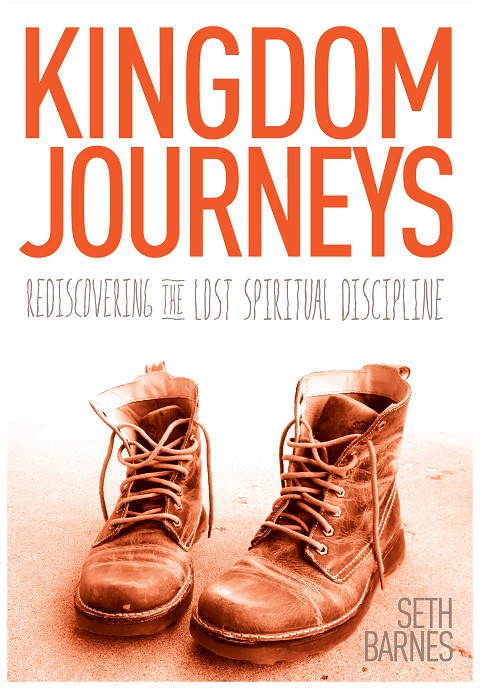
I have a new appreciation for the importance of journey, the subtle ways it is different from other spiritual growth and it’s ability to “accelerate discipleship” or “turbo-charge a person’s faith walk” in the words of Seth Barnes.  Seth, founder and executive director of Adventures in Missions, goes so far as to call it “the lost spiritual discipline”.  In his book, Kingdom Journeys: Rediscovering the Lost Spiritual Discipline, he says “A journey is an act of leaving – a process of physical abandon that teaches us how to do the same spiritually.  Perhaps, to find your true identity you need to abandon everything else.” (p. 22)   

Finding your true identity and stripping away the things that provide false security –  it’s worth doing.  It’s important work for anyone who wants to advance God’s kingdom in the world.  Journey helps you do this.

We see the theme in how Jesus related to His disciples – asking them to abandon everything and follow Him, and then sending them out on journeys without their own provisions.  We see it historically in the idea of pilgrimage. 

What makes something a kingdom journey?  From Seth’s book:  “What sets a kingdom journey apart from gap years, road trips, and volunteer jaunts is the central focus on Jesus’ kingdom.  A kingdom journey is first and foremost about expanding God’s reign in the world and increasing it inside our hearts.”  (p. 55)

I encourage you to let the Lord speak to you about it.  See what stirs in you.  See if your view of the world expands.  See if it confirms you are where you are called to be – or if it feeds a restlessness you may already feel. 

Consider what it looks like if journey is really a life-transforming spiritual discipline.