Is There A Better Question?*

Over the years I’ve found myself having conversations that include the question “Is it okay if I _________?”  [Or alternatively, the declaration that “There’s nothing wrong with ________.”]  I’ve been on both sides – as the one saying those things and the one hearing them.

Sometimes it is a sincere desire to discern God’s will and you are bringing a trusted friend or counselor into that process.  But what about the times when it ends up being a thinly veiled request for “permission” to do something you want to do anyway?  Or a justification for your actions?  When you are primarily covering yourself by making sure that scripture (or some other authority) doesn’t explicitly prohibit it?

The topic can be anything – from what you watch on TV to bending the rules in business or relationships. 

But is it the best question to ask?  Does this question (Is it okay if I …?) really lead us to fullness of life?  Or does it reinforce a minimalist mentality – i.e., how close to the line can I live and still be technically okay?  How little do I have to do?  How much can I get away with?  Doesn’t this draw us toward rules and regulations and checklists as proof that we’re okay with God and others – and therefore doesn’t it keep us under the Law?

I believe there’s a better question, one I learned from Andy Stanley many, many years ago: 

“Is it wise for me to _________ ?”

As stated in the footnote, I originally heard this in an Andy Stanley sermon series.  He expands this question even further: 

In light of my past experiences, my current circumstances and my future hopes and dreams,

what is the wise thing for me to do?

Are you willing to ask yourself that?  I think it’s a harder question than “Is it okay”.  It cuts deeper.  In fact, a hesitation or unwillingness to ask the question is probably a sign of what the answer is.  We can get away with “is it okay (i.e., not specifically prohibited)”.  We squirm more under “is it wise”.

There’s another thing I’ve discovered.  When talking with others, you have an entirely different conversation when you couch it in terms of wisdom rather than right and wrong.  It lets you talk about the uniqueness of their situation – their past, their present circumstances, their hopes and dreams.  You don’t resort to the expected Christian pat answers or cliches.  You are less harsh and judgmental.  They are typically less defensive.  You both stay more relationally engaged. 

A couple of quick disclaimers. 

  1. I’m not suggesting over-spiritualizing everything to the point you feel you never get “time off”.  Caring for yourself, doing things that bring rest and nourishment and fun are wise. 
  2. Don’t use “wisdom” as an excuse for not taking leaps of faith or steps of obedience.  I’m not talking in this post about the worldly wisdom that would discourage you from listening to and following the promptings of the Holy Spirit. 

So – Are you willing to set the bar higher?  To not settle for “okay”.  To change the question from “Is it okay?” to “Is it wise?”  To have different kinds of conversations?

*Essentially everything in this post comes from a sermon series by Andy Stanley published, as best I can remember, as Foolproof Your Life and later as The Best Question Ever and preached, again as best I can remember, somewhere between 2002 and 2006.  This post comes primarily from the first sermon in the series, but to this day I can still tell you the topics of every sermon in the series.  My small group went through the DVDs (it was the pre-download era) and it changed how we talked within the group and how we engaged others in conversation.  All these years later (in 2023), we still use this as a guideline..
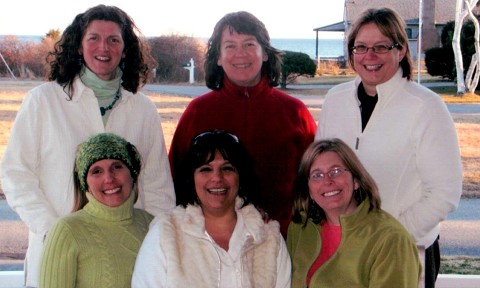
Friends and Community

Originally published in June 2012. Most of these people are still in my life and our friendships have grown deeper over the last 10 years.

Starting with an update. While I still work in Parent Ministry for Adventures in Missions, I now do it remotely from Florida. And once again, I am building community in a new location. My shyness and introversion still impact that – but not to the same degree they did 10 years ago. There’s a comfort level when I’m in new situations or new groups of people that is the result of 10 years of growth. I’m much less hesitant to initiate connection. And bit by bit, my new home feels like community.

But here’s where I was 11 years ago …

In June 2012 I returned to Georgia after a visit to Connecticut.  It was my first visit back after moving to Georgia eleven months before.  So here are some thoughts on friends and community – and what I’m being challenged to do.

It was wonderful to be back – to see friends and supporters and acquaintances.  To visit familiar places.  To eat Tulmeadow ice cream for dinner (and lunch).  To worship with my church family.  To have the long conversations over breakfast and lunch that are harder to do while I’m working full time in another state. 

Friends are treasured gifts.  And I have the best ones I could ever imagine.  I lived in Connecticut for 17 years and deep, deep friendships grew there.  We shared life together for a long time – part of it during a season where I needed more than my fair share of shoulders to cry on.  I have friends I can confide anything to, that know how to have fun, that laugh, that talk about things that matter.  Friends that I would trust with my life.  There are friends that grew out of our kids’ connection, or a shared ministry at church, or co-workers at school. Some of them have driven hundreds of miles to see me since I’ve moved.  Or made curtains for my new house.  Or sent notes of encouragement at just the right time.

Good and deep and lasting friends are rare and I am grateful for them.

But I had something else in Connecticut.  I had community – and I think that’s rarer.  It’s harder to describe.  I had it in a church community that loved me and cared for me and welcomed my gifts.  Where I was able to serve and grow.  Where 35 people showed up to do over 120 combined hours of work on a Saturday when I needed help getting the house ready to go on the market in the midst of an excruciatingly painful divorce.  I had it in that same church community who held out the promise of healing.  Yes, it was individuals who did the practical steps of walking me into that healing but I knew they were part of something bigger – a community that made that possible. 

I had community in a small group.  All of the individuals in the group were friends in their own right.  But the small group was more than just a random collection of friends.  There was a corporate aspect to it – a commitment to speak truth to each other, to support each other, to hold each other accountable, to challenge each other to grow.  To do life together in practical ways.  To paint each other’s houses, to watch movies together, to pray for each other.  The effect was greater than the sum of its parts.  It’s a group that made an annual trip to Disney, that worked together in ministry opportunities like Day Camp or tag sales, that can get together and pick up where we left off – despite the fact that I’m now in Georgia and another couple is in Indiana. 

World Racers talk a lot about community when they return from the Race.  They have experienced it – and they don’t want to lose it.   I understand that. 

I think friendships come easier than community does.  But I no longer want to settle just for friendships.  I think we need to be part of a community that brings life to us, that calls out the best in us, that challenges us, that does life with us on a day in and day out basis.

So – do I regret leaving all that behind to move to Georgia?  It was the hardest part about moving but I discovered something on my trip back to Connecticut.  As wonderful as it was to be there and to reconnect with friends, there was no second guessing my decision to move.  I know I’m where I am supposed to be. 

I sometimes wonder whether the community I had in Connecticut was a fluke, something that I will never have again.  But I’m hopeful that as I continue to live life with friends and co-workers in Georgia, that it will happen.  It’s worth the effort it takes to find it.

And so I’m challenged to step up my efforts to help create it.  To overcome my shyness and my fear that people are too busy to want to spend an evening together eating dinner or playing games or taking walks.  To confront my introversion and be better about inviting people (or maybe to team up with an extrovert who can do the inviting). 

My insecurities cause me to want to be invited into community rather than being the initiator of it.  There’s less fear of rejection that way.  But I want to change that, to be proactive.  I want to be someone who creates community, not just friendships.

The Goal of Parenting (or at least one of them)

The primary part of my job at Adventures in Missions is working with parents of World Racers.  Here’s something I’ve linked for every new group of World Race parents since June 2012.

Eugene Peterson (perhaps best known for The Message paraphrase of the Bible), wrote a book in the early 90s called “Like Dew Your Youth”. It’s primarily geared to parenting teenagers and I don’t remember a lot about the book – except for one key insight that is applicable to all of us who have raised children.

Early in the book he uses the Biblical story of Samuel and Eli (1 Samuel 3:1-10). Samuel had been serving in Eli’s house and one night is awakened by someone calling his name. He runs to Eli asking “What do you want?” Eli, who hadn’t called for Samuel, sends him back to bed. This gets repeated a few times until Eli realizes what is going on and instructs Samuel to answer this way the next time it happens: “Speak Lord, for your servant is listening.” Samuel responds that way and the Lord begins to speak more things to him.

What Eugene Peterson does with this story is set it up as a model of what our goal as parents should be: To transfer the primary voice in our child’s life from our own voice to the Lord’s voice. 

To transfer the primary voice in our child’s life from us to … someone else (the Lord). That is not a small thing. 

Our voice does not necessarily have to become silent, but its use and role changes.

Most parents go through the process of watching their children become adults.  There may be particular times when you enter new stages of this transition.  World Race parents say goodbye to their Racers as they head off for 11 months of ministry around the world.  Their Racers have heard a call. They want to do this crazy, exciting thing called The World Race. Hopefully parents are excited for their Racers, but they’re well aware of what’s going to be hard for them as parents. Even when we see our children “growing in wisdom and stature and favor with God and man”, even when they leave for good and important things, there’s often a hole in our daily life. We miss them. The letting go may feel hard or scary at times.

Most of us say “My children really belong to the Lord, not to me.” But there are times the Lord asks “Do you really mean that? Are you willing to act on that?” When my son was in his mid-teens, I put him on an airplane for a mission trip when I had a strong sense that I would never see him again. I’d battled weeks of this sense, prayed against the spiritual warfare components, recognized my own tendency to fear and all of that. I also knew in my gut that there was no legitimate reason to not let him go on the trip. I knew he was called to it by the Lord. And I knew my own tendency to fear. So I said good-bye, still feeling it was the last time I would see him.

Please note, there is an appropriate protective role for parents to play. Discerning between appropriate protection and appropriate letting go is not always easy. But in this case, I was as sure as I could be that I was not to discourage his desire to go.

There’s a happy ending. He came home just fine. But I had learned an important thing.  When put to the test, I really did believe that my kids ultimately belonged to the Lord – not in a way that releases me from responsibility, but in a way that says I am not to get in the way of them living the life they are called to. And my own spiritual life changed as a result of acting on that. 

John Piper, whose church has a very high vision for spiritual formation in children, said this in a sermon once: (My summary, based on memory) “Parents, if you are sitting in the congregation of this church and your deepest desire is for your children to grow up, get married, live close enough for you to see your grandchildren regularly, have a house/white picket fence/good insurance plan – then you might be in the wrong church and you might want to leave. Because this is fair warning that we intend to go after your child’s heart and our highest hope is that they will give that heart fully to God and His call. And we expect that for some of them that call will take them around the world, into needy and risky places, with no medical care and limited chances for you to see your grandchildren. So decide now.  Is this the right church for you?” 

Everything in us may know that the answer needs to be “Yes” – but the cost is right there in front of us too. This could be a costly “Yes”.

I hope for all parents what we tell World Race parents we hope for them – that the Lord meets you every step of the way, especially if there are hard parts of letting go. We believe He has things to say to you – and perhaps even new calls on your own life.  For World Race parents, we believe their eyes will be opened and their hearts will be stirred by the things they read in the blogs and hear from the Racers. For other parents – I hope you have your own way of discovering what God is doing in the world.  There’s a journey for you in this – separate from what is going on with your children. 

Navigating this process of guiding your children into adulthood, letting go of your children when the time is right, providing encouragement for them to “own” their identity and authority in Christ – these things will give them great opportunities to grow into the men and women of God they are created and called to be. 

This process can also take you to new places of who you are called to be.  Ask Him – “What do you want to do in me as I release my child into Your call on their life?”

My Uncomfortable Relationship With Praying For Healing

Originally written and published May 28, 2012 and I debated doing a major rewrite. But to be honest, I’m still working this out. I have, however, included an update – and I do pray more boldly.

I’ll start with the update. Ten years after I first wrote this, I have grown in boldness. And in praying immediately for someone when a need is mentioned. I still say “I’ll pray for you” – but I’ll also say “Can I pray for you right now?”

Somewhere along the way, I’ve lost most of my fear of “doing it wrong”. And I’ve increasingly let go of my misguided feelings that somehow the outcome is my responsibility.

However, I do still wrestle with the big picture at times. I’ve watched 2 young moms, with very young children left behind, die of cancer in the last year despite huge numbers of people storming the gates of heaven on their behalf. I’ve never believed there was a magic formula to guarantee healing, but some answers of “not now” or “not here on earth” are harder than others.

I’ve watched someone come through pancreatic cancer to health and I’ve seen others die from it. Why did it go one way for one and the other way for the others?

Aging also presents new challenges to me on how to pray. Am I bold enough to pray against the symptoms of normal aging? Is it presumptuous to pray that way? Should I just be praying for grace and peace and pain relief?

So there’s still some uncomfortableness. I don’t have it figured out. But I’m not at the same place I was 11 years ago.

Where I was eleven years ago:

I’ve always had an uncomfortable relationship with praying for healing.  I can  easily get caught up in “What if it doesn’t happen?”  Or “What if I my faith isn’t strong enough to believe it will really happen?  Or “What if this is the Lord’s time to take someone home?”   The magnitude of what I’m asking when I pray for healing seems too overwhelming. And the “risk” of “doing it wrong” feels too high.

I believe in miraculous healings.  I’ve seen them.  I’ve heard stories from people I trust.  So that’s not my problem.  My problem is believing that I’m “good enough” for God to use me to bring it into existence.  There’s a fear that I “can’t do it right”.  And I become tentative.  I know all sorts of things about my identity and authority in Christ – but in this area, it’s been hard for me to move from “knowing it” to “doing it”.

Even early on in my prayer journey, the catchall phrase “if it is Your will” felt wishy washy and self-protective – more about giving me an out than a true desire to acknowledge God’s power and sovereignty. 

Francis McNutt’s book Healing helped some – introducing me to the concept that healing is an integral part of the gospel and not just a sign or wonder that accompanies the gospel proclamation.  In Luke 4:18  Jesus proclaimed:  “The Spirit of the Lord is upon me, because he has anointed me to proclaim good news to the poor.  He has sent me to proclaim liberty to the captives and recovering of sight to the blind, to set at liberty those who are oppressed, ….”  It provided some new theological understanding, but still left me praying tentatively.

Then I discovered Mary and Martha’s approach in John 11.  When Lazarus became ill they sent a message to Jesus saying “Lord, the one you love is sick.”  Throughout John we see people merely stating the problem to Jesus (sickness, lack of wine at the wedding, etc.) without telling Him how He should fix it.

So I clung to that “prayer” – Lord, the one you love is sick [or hurting or whatever the situation was].  It worked great.  It got me off the hook of asking for a specific thing.  And in many situations, it’s still a model I use today and that I believe is a good model when I don’t know how to pray.

Somewhere along the way, in preparing to do the parable of the insistent friend (Luke 11:5-8) in children’s ministry, the simplicity of it struck me.  This parable comes in Jesus’ teaching about prayer and involves a man who goes to his neighbor late at night, after everyone is in bed, to request bread for a visitor who has arrived.  It’s a bold and “inappropriate” thing to do – disturb his neighbor late at night.  But it teaches us that intercessory prayer is boldly going to the One who can meet a need for someone else that we are unable to meet ourselves.  So it helped me take a few baby steps in boldness.

But my hidden secret is that I’m afraid to pray boldly for healing.  I think I’m better at praying faithfully than I am at praying boldly.  And there is a difference.  I believe Scripture affirms both as important but I know the Holy Spirit’s nudge is for me to learn more boldness. 

The reality is that I can usually ignore my discomfort.  But every so often something happens that disturbs this tentative equilibrium I’ve built.  It forces me to face the fear I like to keep hidden. 

This past week [in 2012] at World Race training camp, a young man was healed.  After profound hearing loss for most of his life, requiring him to wear hearing aids, his team prayed for him and he was healed.  The healing is profound. His parents confirmed that.

I hear similar reports on a regular basis – from the World Racers and from others.  And sometimes, those stories begin to nag at me.

 And at least temporarily, my yearning to be bold is stronger than my fearfulness about what won’t happen.

Gratitude and Transformation

From May 20 2012

Erwin McManus, in a couple of the talks I’ve heard him give, has posed this question:  Why are some people transformed as they go through things and other people are not transformed?  Why do some move on, and some stay stuck? 

His conclusion is that gratitude makes a big difference. 

I’m well aware that I’ll always have days here and there when my emotions go up and down.  And there will be days that are harder than others.  But I’m also so aware of what I have to be grateful for.  For instance …

I get to …

  • … spend time with family.  I don’t take lightly that this is a precious thing.  The last few weeks have brought many opportunities – an Easter trip to Chicago to see the kids, a trip to Roanoke to see my mom and sister, a visit from my daughter who lives in Chicago, a trip to the aquarium with my nieces, shared meals with in-laws. 
  • … be part of an organization that disciples teens and 20-somethings in exciting ways.  I love being a part of what God is doing in this generation.  This week I’ll spend a day at World Race Training Camp.  In July we’re launching 3 World Race squads (approximately 150 people) who will spend 11 months bringing the Kingdom to far away places.  I get to watch it happen and meet the people and hear the stories.
  • … open my house to a wide variety of people.  People who are home from mission fields like Peru, or looking to move to Georgia, or preparing to launch long term to Cambodia, Swaziland or Ireland.  People who need a place to stay for a while or people who come just for dinner.  It’s all good.
  • … enjoy a home in a beautiful setting, with plenty to eat and enough resources to do a little bit of pampering of both myself and others. 

I love …

  • … parenting adult children
  • … ministering to parents
  • … making a house a home
  • … cooking/baking
  • … reading
  • … going to movies with friends
  • … talking about both big and little things
  • … seeing water (Lake Lanier and rivers) and mountains as I drive to work (or now, 10 years later, living within walking distance of the beach

I will never forget that …

  • … hard times, and the work put into surviving and getting through them, can bring gifts that last far beyond the end of that particular heartbreak – and which have far wider applicability in your life.  They shape your character, your outlook and your compassion.
  •  … in the hardest of times, I was grateful for His Presence.  God was bringing the recognition that I was stronger than I thought I was and that I had more value than I thought I did.  And seeing myself that way was life-changing.
  • … when who I was as a person and as a woman was most under attack, counselors walked me through the process of accepting that I was deeply loved by my Heavenly Father and by my friends.
  • … when I’ve been underutilized and frustrated in jobs, I’ve learned what it means to find all of my identity in Him – and I’ve learned when to accept a season of “invisibility” and when to step out in faith toward something different. 
  • … when I left friends and community behind in Connecticut, I came to a new place that is bringing life to me in Georgia – and now 10 years later a new community in Georgia and the opportunity to continue to work remotely.

So I’m grateful.  And I hope Erwin is right.  I hope it continues to transform me, to bring me deeper into the heart of God, to make my character and my actions more like His.  I hope it gives me eyes and ears and hands that hear and serve and enjoy and bless others.  That it causes worship to rise plentifully from my lips and my mind and my heart. 

Thanks be to God … who gives good gifts … and who brings deep and real transformation.

Running Into The Arms of Jesus

IMPORTANT NOTE: This was written over 10 years ago (and originally published May 13, 2012), when certain wounds were fresher and not as healed as they are now. The truth of this blog still holds for me but I am not currently in the middle of this kind of intense pain.

There are times when tears come unexpectedly for me.  When my emotions feel close to the surface, ready to spill over.  A day feels melancholy.  Or I feel knots starting to form in my stomach.  I feel particularly lonely.   Something pokes at an old wound or something hard looms on the horizon.  It feels like the lies I’ve worked so hard to not believe suddenly find new weak points in me to attack.  Or maybe I’m suddenly tired – of working full time, or of having to be strong, or of being alone.  I woke up this morning realizing it was going to be one of those days.

The unexpected part is that most days these same things could exist and they aren’t a burden, I may barely notice them, and they don’t bring tears to my eyes.  I don’t spend my days working up energy to “be strong”.  I enjoy my life – it’s not a constant struggle.  My normal quietness is peaceful, not melancholic. 

So what causes two similar days, in terms of circumstances, to feel so different?  I can usually identify possible triggers for the emotions.  But why are those triggers no big deal most days, yet seem to get their hooks in me on other occasions?

I don’t know why.  I do know I have friends that I can call or ask for prayer.  It’s both good and wise to do that.  I do know that this will pass.  I do know that even on these days, I can have extended periods of good “distraction” – where being with people feels normal and life-giving.  But that doesn’t always “solve” the problem and the emotional fragility returns after that time is over. 

At the core, sometimes I just need Jesus.  Not in my normal quiet times, not in my typical prayer times, not in the wonderful gift of friends.  I just need Him. 

An old hymn, I Will Arise and Go To Jesus, has this chorus:

I will arise and go to Jesus,

He will embrace me in His arms;

In the arms of my dear Savior,

Oh, there are ten thousand charms.

So I run to Jesus, desperate for His arms around me.  Not wanting to talk or think or analyze or take the steps I’ve learned in counseling.  Just wanting to be held.  And knowing that His arms are my safe place, my best protection from the things that hurt and ultimately where I will find what I need.

Is It Conviction? Or Condemnation?

Revised from an original post on May 6, 2021

I’ve been thinking about the difference between conviction and condemnation – and there is a basic truth I come back to time and time again.  This is not a theological treatise.  It’s a general rule of thumb that I believe is true.*

The Holy Spirit convicts of sin.  We know we’ve done something that needs to be taken care of.  Conviction, in my experience, is specific and it relates to the action and not to your identity.  You told a particular lie, you cheated a particular person, you were cruel to someone you know.  You did a particular thing that you know was wrong.

When we bring this to God and others, and take appropriate actions to make things as right as we can with another person,  the relational distance between us and God is taken care of and the Holy Spirit reassures us of that. 

The goal of this type of conviction is the restoration of your sense of relationship.  It creates closeness and intimacy, freedom and joy.   It is based on truth.

Condemnation, on the other hand, is from the enemy.  He may try to disguise it as conviction but condemnation tends to be general rather than specific and it attacks who you are rather than what you did.  “You’re a liar.”  “You always destroy relationships.”  “You’re an awful person.”

Attempts to earn your way out of condemnation (“I’ll try to be better”) don’t work.  Acceptance (“Everything really is my fault.”) leaves you stuck in despair.  And confession can seem to dig the hole deeper – because the enemy has created a scenario that is fundamentally different from conviction.  If you confess and nothing seems to change, it can keep the cycle going by seeming to provide proof that you’re the problem and it’s unsolvable. 

The goal of condemnation is the destruction of relationship.  It creates distance and isolation, bondage and despair.  It is based on lies.

So how do we deal with condemnation? 

  • Learn to identify the “voice”, to be able to discern between conviction and condemnation.
  • Cling to the promise in Romans 8:1:  “There is therefore now no condemnation for those who are in Christ Jesus.”   Don’t let the lies or the partial truths of the enemy rob you of this reality.
  • Let the Lord speak truth to your heart, especially about how He sees you.  Listen for His still, small voice.  Look to scripture.  For example, Zephaniah 3:17 says this:  “For the Lord your God is in your midst, a mighty one who will save; he will rejoice over you with gladness; he will quiet you by his love; he will exult over you with loud singing.”
  • Ask the Lord to examine your heart, to bring conviction where appropriate and to give you courage to make things right with Him and with others.  “Search me, O God, and know my heart!  Try me and know my thoughts!  And see if there be any grievous way in me, and lead me in the way everlasting!”  Psalm 139:23-24.
  • Relax, as much as you can in the midst of your struggles, in His love and trustworthiness.  You don’t have to earn it.  He wants you to feel securely loved.  One of my lifelines has been: “And so we know and rely on the love God has for us.”  (1 John 4:16a).  I’ve clung to that at times when everything else was falling apart, when attacks were coming non-stop. 

So – is it conviction?  Or condemnation?  Is it truth?  Or is it lie?  It’s crucial to learn the difference.

*For this, I’m speaking primarily to those already in relationship with Jesus.  I’m not talking about the work of the Holy Spirit that initially draws us to Him.

Is It Really Good News?

Originally posted in April 2012. But this has continued to be one of the biggest challenges to me personally as I try to articulate to others what my faith means to me.

I’m struck by a particular detail in the story of Jesus’ encounter with the woman at the well in John 4.  It’s not her outcast status or even the fact that Jesus took the unusual step in His culture of having a conversation (a theological one at that!) with a woman.

What I’m struck by is what she says when she runs excitedly back into town.  “Come, meet a man who told me everything I ever did.”  She goes on to wonder whether He could be the Messiah, but her opening excitement is that He told her everything she had ever done – including that she had had five husbands and was not married to the man she was living with. 

And it appears to have been good news to her, freeing news to her, to meet a man like that.  The town knew the details of her life and they used them to shame her.  Jesus knew the details of her life and He used them to bring her into relationship with Him.

It makes me wonder.  When we interact with people, or when we introduce people to Jesus, do they come away feeling they’ve encountered “good news”?  News that produces freedom and life and relationship rather than shame and guilt and distance.  Do we speak of grace but in reality impose law?  Do we exude the abundant life Jesus promises or do we focus on what they have to give up?

Lauren Winner, in her book Real Sex (The Naked Truth About Chastity), says that the church has typically not done a good job of presenting chastity as “good news”.   I think it’s a common problem, impacting many areas of our lives.  We wrestle with the call to holiness and the good news somehow becomes a list of dos and don’ts.

I’m not talking about tossing truth out the window or not ever addressing the issue of sin.  I also know we are called to live holy lives, that we are to be different than the world around us.  Discipleship requires us to address thorny issues.  Our actions matter.  Sin is not to be taken lightly.  Jesus Himself told the woman caught in adultery to “go and sin no more” – but He did so after a grace-filled interaction (John 8). 

At some point I will probably write about confronting people and speaking the hard truth, about facing consequences of unwise or sinful choices, about setting appropriate boundaries.  Scripture tells us we need to do those things and it tells us how to do them.  It’s not that I don’t believe those things are important.  It’s just that it is not what this post is about.

This is about the good news of encountering a God who knows everything about us – all the ugly parts, all the regrets, all the things we would like to keep hidden – but who speaks good news into that in a way that transforms lives.  That makes an outcast woman run into town and invite those who shun her to follow her back to the well because she has encountered someone who changed her life. Jesus was full of grace and truth.  His conversations set people free.  I want to be like that.

Moving Beyond Reflection and Gratitude

[This was true when first written 4/23/12 and is still true now.]

In some circles, you hear people bemoaning the fact that many churches are inwardly focused.  They care about “their own” and appear to largely ignore the world out there that needs to hear the gospel.  I believe churches do need to provide a degree of self-care and that there are often valid things pulling a church in that direction.  Certain stages of discipleship could fall into this category.  And it is appropriate to care for the spiritual, physical and emotional needs of the “family” – to love them in real and tangible ways.  But a church falls short of its mission if it never looks beyond itself – if it hoards the gifts (spiritual and otherwise) that it has received. 

If this is true for churches, is it also true for individuals?

You’ve probably discovered by now that I am incredibly grateful for the healing that has occurred in my own life.  And reflecting on that, remembering that, is an important part of my story. 

But if my testimony is only that I’ve been healed (or blessed in other ways) and am now able to live a peaceful life, then I believe I have stopped short of where this journey is supposed to take me.  I become selfish if I hoard these gifts.  There’s a purpose for these things that goes beyond my own happiness or less stressful life. 

Don’t misunderstand.  I’m not saying you have to “get your act together” before God can use you in the lives of others.  Or that there’s some sort of burdensome “pay it forward” checklist God is keeping track of.   Or that we can never just relax and enjoy where God has brought us.

What I’m saying is that the things Jesus has done in my life equip me to pour into others.  I can take my former woundedness and use it to speak hope.  I can testify to God’s presence in the midst of pain.  I can walk beside someone with deeper understanding of both their present condition and their future possibilities.  I can use my home to bless others through hospitality. 

Most people will probably have seasons when their own pain makes it difficult to see anything else.  When they are the ones desperately in need of those who can speak hope and comfort and healing.  When their time and energy are consumed by something that feels overwhelming.  When clinging desperately to Jesus is the only thing they can hope to do to barely survive the day.  I know I’ve had those seasons, and I may have them again. 

Right now, though, it feels that I’ve been healed in order to heal, been blessed in order to bless, been comforted in order to comfort, been set free in order to set free. 

The gospel message is not just salvation.  It is hope and healing as well.  It is proclaiming freedom for the prisoners and recovery of sight for the blind.  It is setting the oppressed free.  It is doing the things we see our heavenly Father doing. 

There is a world desperately in need of that message. 

Lord, let me not get stuck hoarding what you have given me.

Don’t Settle For Peace – Press On To Joy

[Originally written 4/15/12 but there’s a substantial update in this posting. In the last decade I’ve moved more comfortably into joy and what that looks like in me.]

To be deeply peaceful – no matter what the circumstances – is something I’ve learned in the last decade or so.  When I first wrote this, I was coming out of the most painful season of my life. The Lord had worked on the level of fear in my life, I’d been through excruciating grief, I’d wrestled with whether I was lovable.  There had been a lot – and recognizing that I can have deep and abiding and sustaining peace in the midst of those things was one of the gifts of that journey.  There can be a solid peacefulness that co-exists with intense pain.

Peace came pretty naturally to me in those days – and is still a solid pillar in my life now.  When something challenges it, I know the steps to regain it.  It takes more than it used to to disturb the peacefulness I feel, and when it does get disturbed it’s not the same struggle to get back there.  Jesus promised us that His peace is different from the world’s peace – and I’ve experienced that.

But I was once challenged to not settle just for peace, but to press on to joy.   This was earlier in my journey and the advice giver acknowledged that after a long season of pain and anguish, he knew that arriving at a place of peace felt really good.  But he encouraged me to press on until I reached joy.  For the joy set before Him, Jesus endured the cross.  (Heb. 12:2)

But what does joy look like in me?  Ten years ago, here is what I felt: Despite huge amounts of breaking free from it, I’m still shy in most settings.  I don’t have the bubbly personality where joy spills over infectiously.  I’m quieter by nature.  I don’t spontaneously blurt out the things that indicate joy.  Shyness creates unique challenges in this area.  The fear of embarrassment is still a struggle for me.  It seems as if peacefulness suits my personality better than joy does.

But I had a nagging sense that the Lord had more for me.

It’s not that joy was not present.  I did think I had pressed past peace and into joy.  It’s that I didn’t know how to make it visible.  I often think that if I could change one thing about myself, it most likely would be this.  I’d like to be more expressive to those around me – especially in the things that indicate joy and delight.  But there I was, still quiet and shy about it.  

A few days before writing this ten years ago, something caused a blip in my peacefulness and my joy.  It hurt and it was unfair and I spent one evening doing a little bit of grieving.  I brought a handful of people alongside me.  The peace began to flow back in.

And I realized this at that point – the reminder to press on to joy was coming more automatically those days.  It had become an integral extension of peace.  Whether or not I would ever be able to express it in a way that others could see, I did know that the joy of the Lord is my strength. 

In the decade since then, I have learned to be more comfortable with a quiet joy. My shyness is still there, but not as controlling. I still have times when I wish I could be “the fun one”. But I also am very comfortable with who I am.

I still think I live more comfortably in “peace,” but “joy” is also a fruit of the Spirit and I want my life to be characterized by it as well. The Lord has stretched me in the last decade – and I am bit by bit relaxing into it in new ways.